Are you into FPV drones? If you’ve ever felt the frustration of crashing an expensive racing drone — where one crash means hundreds of dollars gone — or been disappointed by slow micro drones that lack the thrill, this project is for you. At Aomway, we love showcasing cutting-edge DIY electronics projects that push the boundaries of what’s possible with minimal cost.
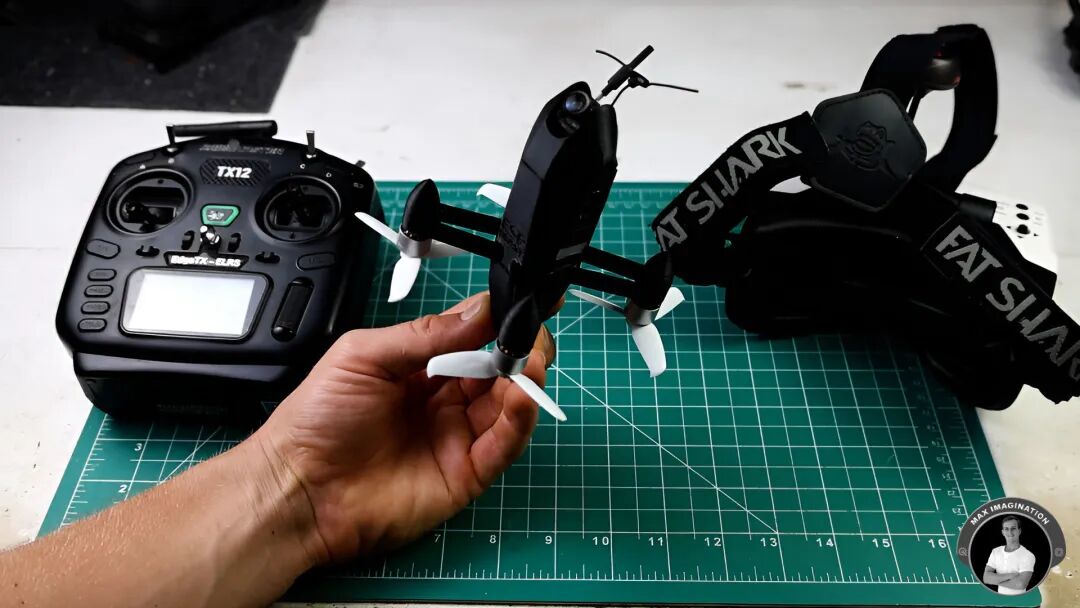
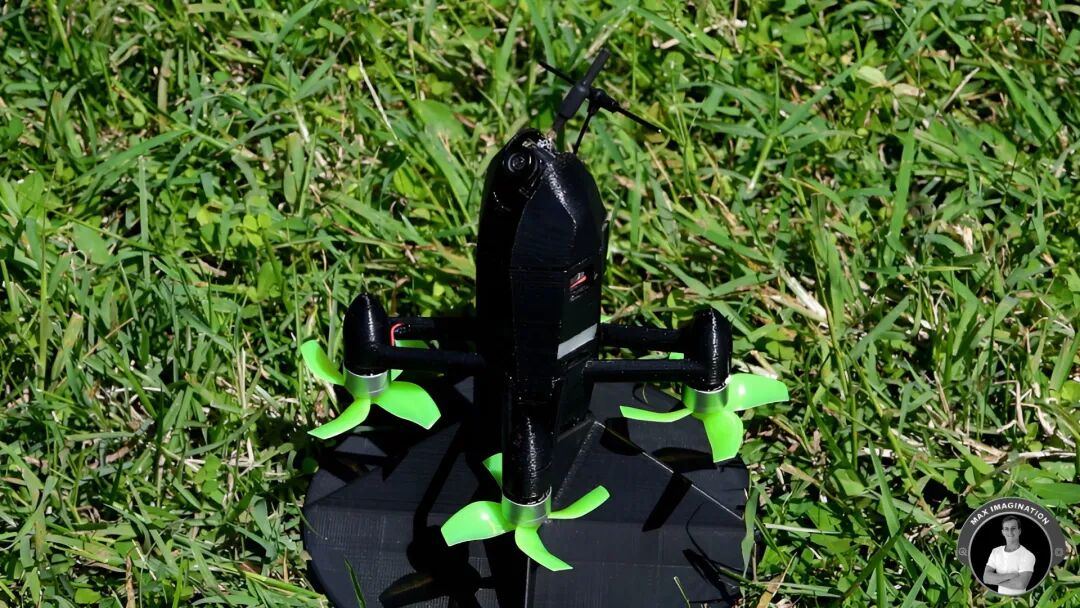
Inspired by Max’s open-source project, the ESP-BLAST is a palm-sized rocket drone built around a single ESP32 chip. With a streamlined bullet-shaped body for minimal air resistance and four micro brushless motors, this tiny beast hits 100+ km/h — and it costs only about 1,100 RMB (~$150 USD) to build. The entire project is fully open-source, including all design files, firmware, and tutorials.
💡 Key Highlight: The entire project is completely open-source. All design files, firmware, and tutorials are free. Total cost is approximately 1,100 RMB (March 2026 pricing, excluding spares and shipping) — less than half the price of a commercial high-speed racing drone!
According to the 2025 Global Open-Source Hardware Report, the number of DIY drone enthusiasts grew by 47% year-over-year. Low-cost, high-playability projects like this have become the new favorite among electronics hobbyists. Today, we’ve compiled a comprehensive step-by-step build guide — skilled makers can complete it in just 3 days.
Step-by-Step Build Guide (Pitfall Edition)
Step 1: Gather Your Parts — Don’t Buy Random Stuff
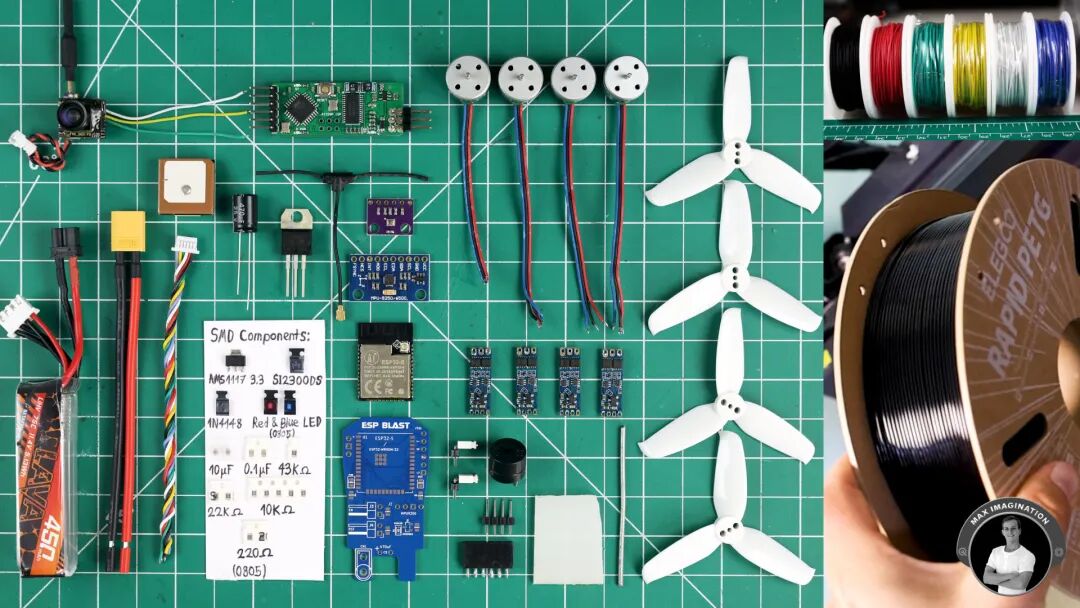
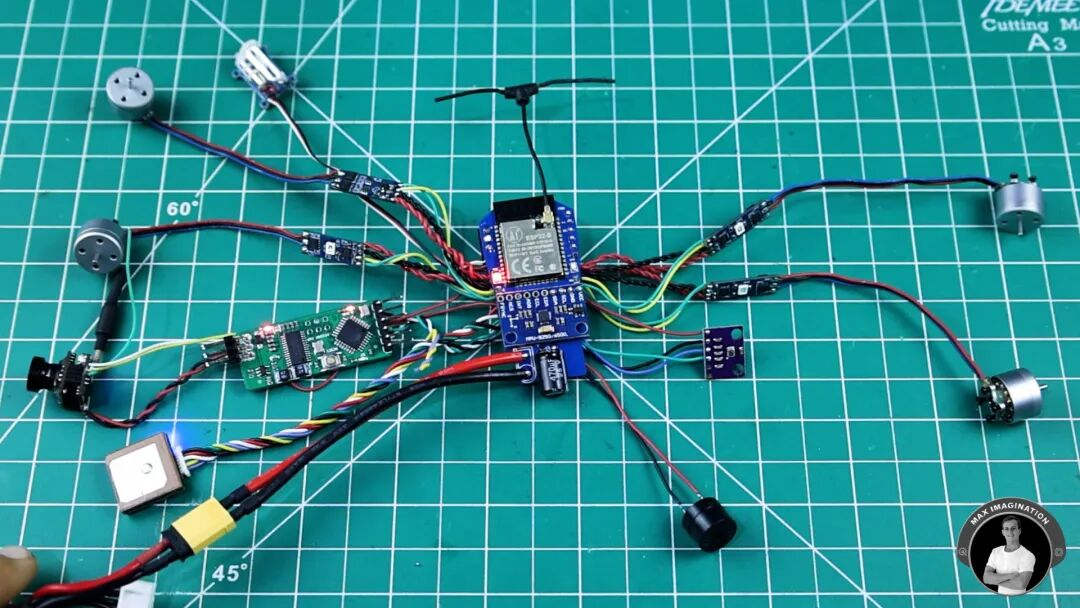
Follow the master’s curated BOM list. Core components include: ESP32 module, 1104 brushless motors, 4 micro ESCs, 2.5-inch propellers, custom PCB, FPV camera with OSD module, GPS, 3S LiPo battery, PETG filament, and more. All purchase links are included in the resource pack — no need to hunt for parts yourself.
Step 2: 3D Print the Frame — Avoid These Traps
- Don’t use PLA! PLA softens in the sun and shatters on impact. Use PETG for durability and crash resistance.
- In humid southern climates, always store filament in a dry box — otherwise layer lines will be large and prone to delamination.
- Don’t exceed 80 mm/s print speed with 0.2 mm layer height, or PETG will ooze and weaken the structure.
- Lower the frame Z-axis by 0.2 mm before printing to prevent arm warping.
All 3D files (STL, STEP, and pre-tuned G-code) are included in the resource pack — print-ready with no parameter tuning needed.
Step 3: PCB Fabrication — Money-Saving Tips
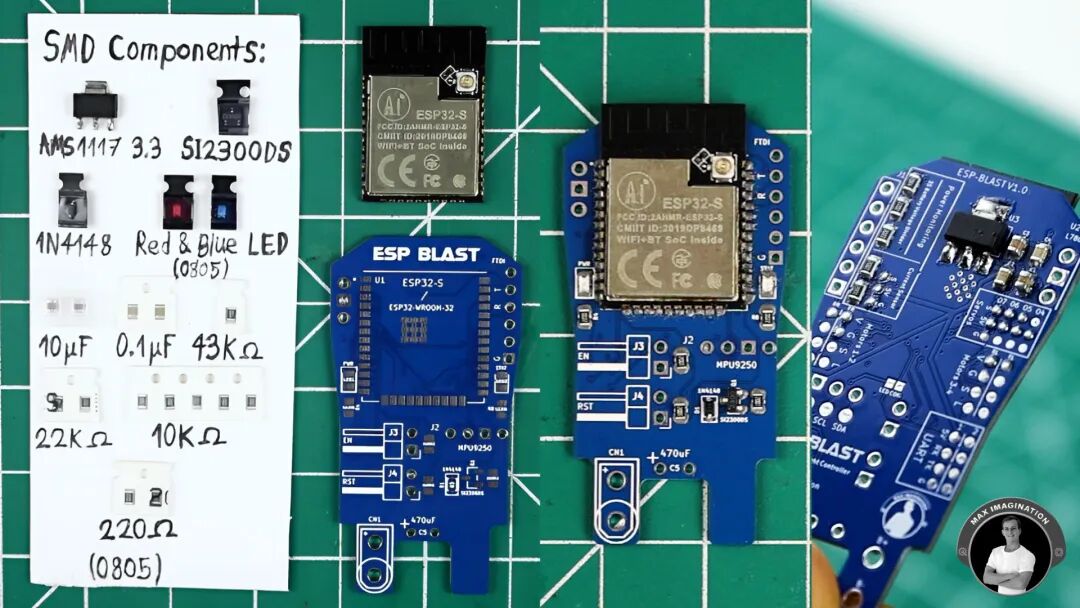
Download the open-source Gerber files and order from JLCPCB. A 4-layer, 1.2 mm thick board costs just $7 for 5 pieces. New users get a $123 coupon — practically free! If you’re worried about soldering SMD components, JLC’s SMT assembly service saves a lot of hassle.
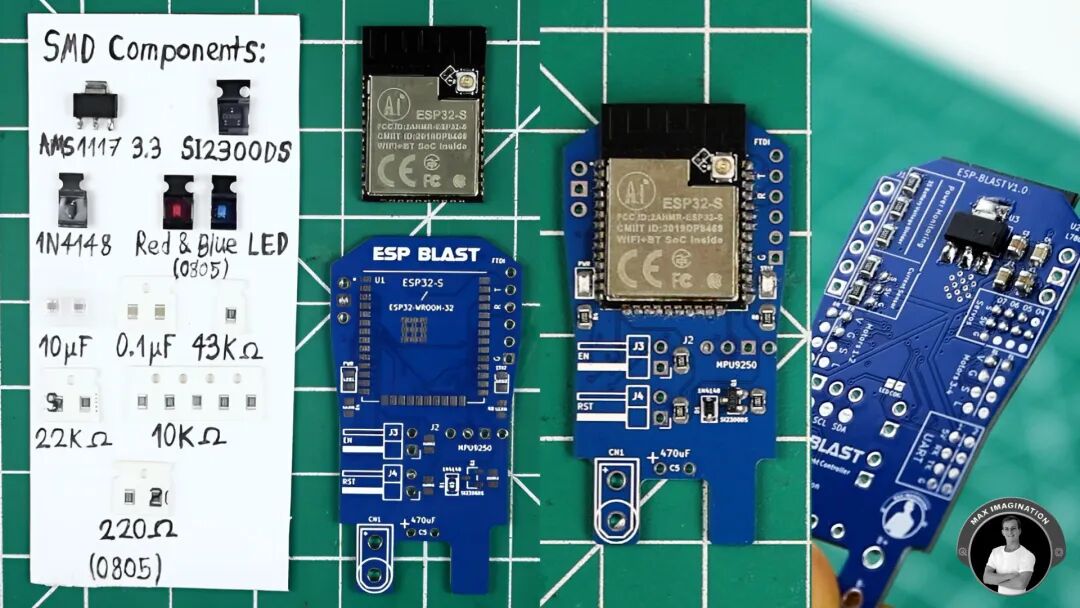
Step 4: Firmware Flashing — Lessons Learned the Hard Way
- Don’t touch the wiring while flashing! I bumped it once and spent 2 hours recovering the board.
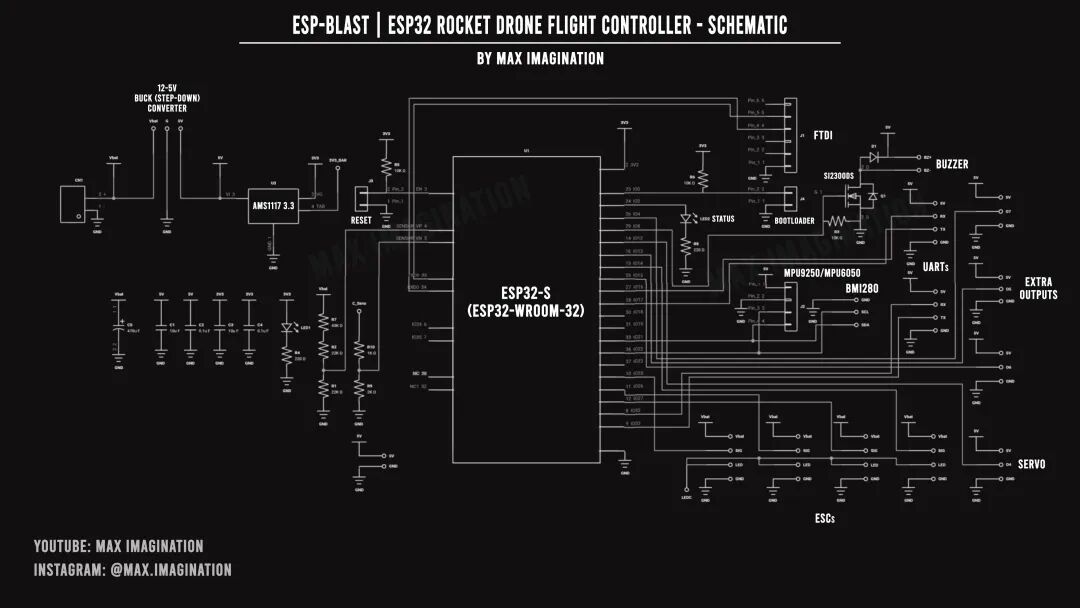
- All parameter configurations are provided as copy-paste CLI commands for Betaflight — no manual tuning required.
- The OSD interface can be customized to display speed, voltage, flight time, satellite count, and more.
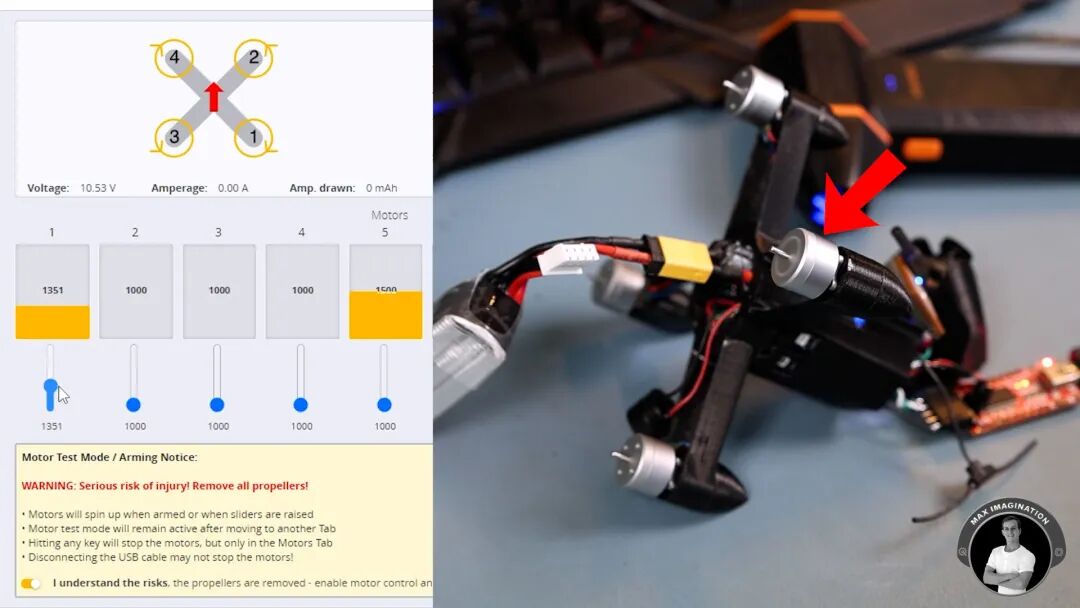
Step 5: Assembly Tips
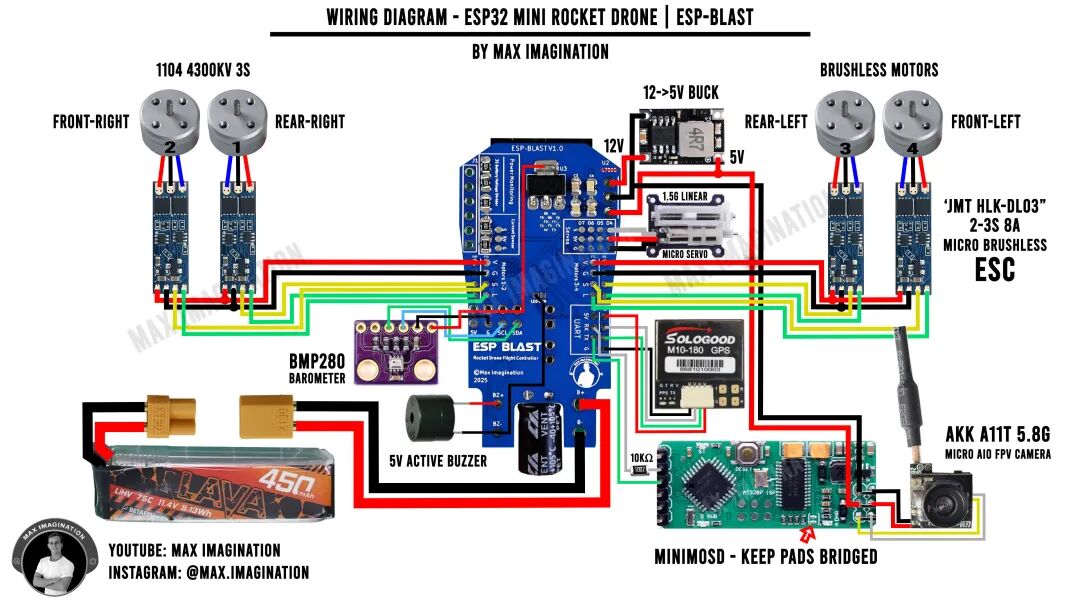
- Mount motors in pusher configuration (arms above props) for better airflow efficiency and slightly higher top speed.
- Keep wiring short and tidy — otherwise the battery won’t fit.
- For the first power-up, use a short-circuit-protected power supply instead of plugging in the battery directly. Burning components is not fun.
Project Resources
Official Project Page: Elektor Magazine — ESP-BLAST Build Guide
If you’ve already built one or run into issues during the build, feel free to share your experience in the comments. We read every single one!
ESP-BLAST Key Specifications
| Parameter | Value |
|---|---|
| Top Speed | 100+ km/h |
| Main Controller | ESP32 |
| Motors | 1104 Brushless |
| Propellers | 2.5 inch |
| Frame Material | PETG (3D printed) |
| Battery | 3S LiPo |
| FPV Camera | Adjustable-angle with OSD |
| Navigation | GPS module included |
| Total Build Cost | ~1,100 RMB (~$150 USD) |
| License | Fully Open Source |
At Aomway, we believe open-source hardware is the future of electronics innovation. Projects like ESP-BLAST prove that with the right community and documentation, anyone can build professional-grade hardware at a fraction of the cost.
Frequently Asked Questions
Q: What is the ESP-BLAST drone?
The ESP-BLAST is a palm-sized, open-source rocket drone built around an ESP32 microcontroller. It features a streamlined bullet-shaped body, four micro brushless motors, and an adjustable-angle FPV camera. Capable of reaching 100+ km/h, it costs only about $150 to build — less than half the price of commercial high-speed racing drones.
Q: How much does it cost to build the ESP-BLAST?
The total build cost is approximately 1,100 RMB (~$150 USD) as of March 2026, not including spare parts and shipping. This is achieved by using off-the-shelf components and open-source design files, making it significantly cheaper than commercial alternatives.
Q: What skills do I need to build the ESP-BLAST?
Basic electronics soldering, 3D printing (or access to a 3D printer), and familiarity with flashing firmware via USB are the main skills needed. The project includes detailed step-by-step instructions, pre-tuned G-code files, and copy-paste Betaflight CLI commands, making it accessible to intermediate makers.
Q: Why use PETG instead of PLA for 3D printing?
PETG is significantly more durable and heat-resistant than PLA. PLA softens in sunlight and shatters on impact — both common issues for drone frames. PETG provides the toughness needed for high-speed crashes while remaining easy to print.
Q: Can I buy a pre-assembled ESP-BLAST?
Currently, the ESP-BLAST is only available as a DIY open-source project. However, since all design files, Gerber files, and firmware are freely available, third-party manufacturers or community members may offer kits or pre-built versions in the future.
Q: What is the flight time of the ESP-BLAST?
Flight time depends on the 3S LiPo battery capacity and flying style. With a typical 450-650mAh battery, expect 3-6 minutes of aggressive flying at high speed. Longer flight times are possible with larger batteries, though this may affect agility and top speed.
Q: Where can I find more DIY drone projects?
Visit Aomway for regular updates on open-source hardware, DIY electronics projects, and drone technology. We curate the best community projects and provide detailed build guides for makers of all skill levels.
Any questions pls contact: [email protected]