

Key Takeaways
- Modern RF transmitters must satisfy four goals at once: efficiency, linearity, spectral purity, and robustness to antenna load variation.
- At 6 dB power back-off (PBO), a conventional power amplifier’s efficiency can fall to roughly half its peak value.
- A 2-Way Doherty PA holds high efficiency near 6 dB PBO and scales to N-Way designs.
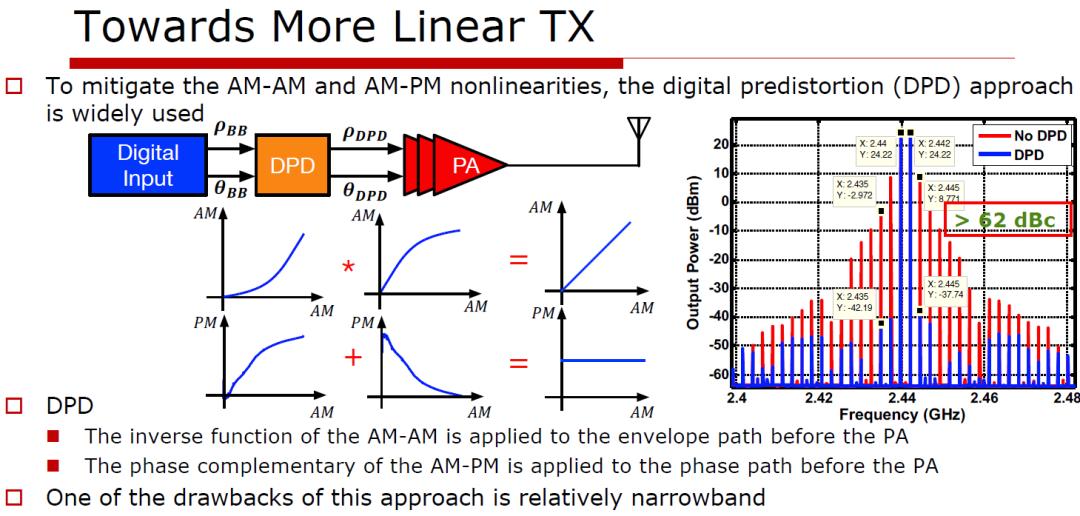
- Digital predistortion (DPD) corrects the AM-AM and AM-PM distortion that drives spectral regrowth, adjacent-channel leakage, and EVM degradation.
- A 40nm LP CMOS 4-Way Doherty DTX achieves average efficiency above 20% and peak output power above 27 dBm at 5 GHz.
As of 2026, the modern RF transmitter is defined by one hard question: how do you keep a power amplifier efficient while it backs off from peak power to handle high-PAPR signals? According to a detailed industry teardown, the answer is a layered blend of Doherty load modulation, digital predistortion (DPD), and RF-DAC architectures that push ever more RF functionality into the digital domain.
The report is not a primer on a single component. It argues that the wireless transmitter is shifting from a traditional analog/RF architecture toward a digital-intensive form, where efficiency, linearity, and spectral purity improve together instead of trading off against one another.
What the Source Report Actually Argues
Rather than isolating the power amplifier (PA), the material treats the modern RF transmitter as a system that must simultaneously solve efficiency, linearity, spectral purity, wideband modulation, and antenna load variation — and then increasingly digitize RF functions through Digital-Intensive Transmitter (DTX) architectures.
The Core Tension: Efficiency, Bandwidth, and Linearity
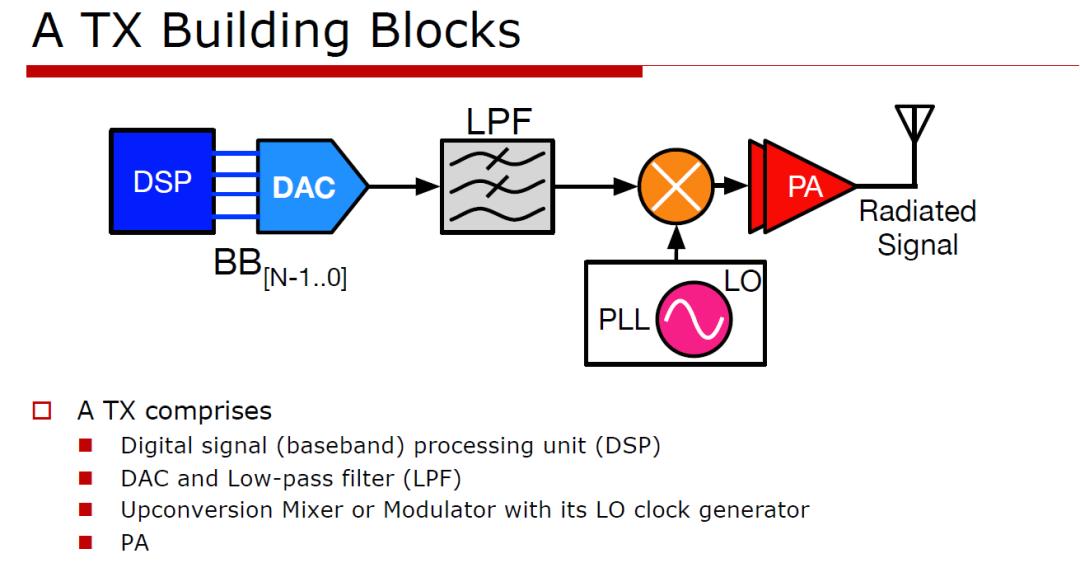
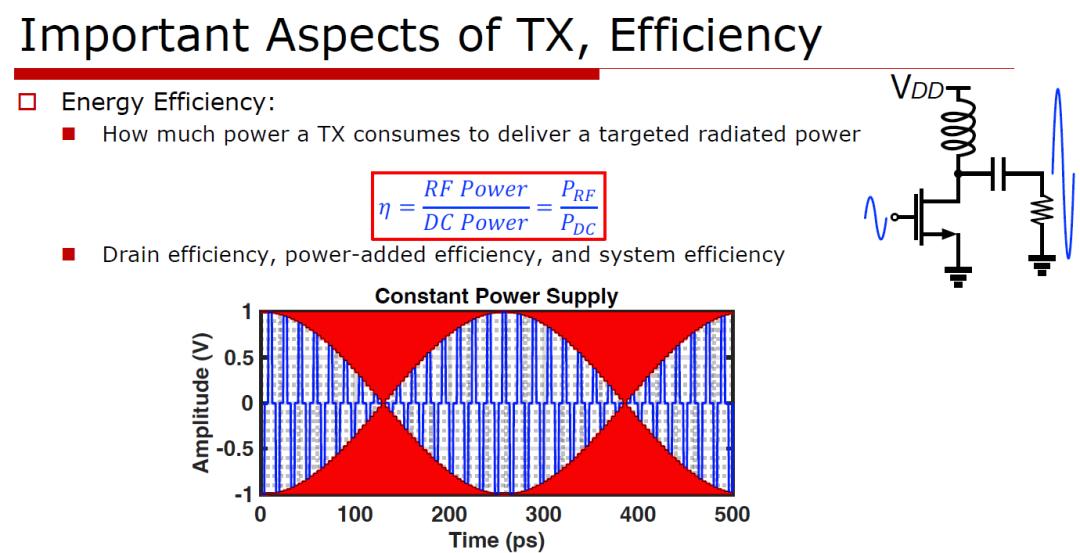
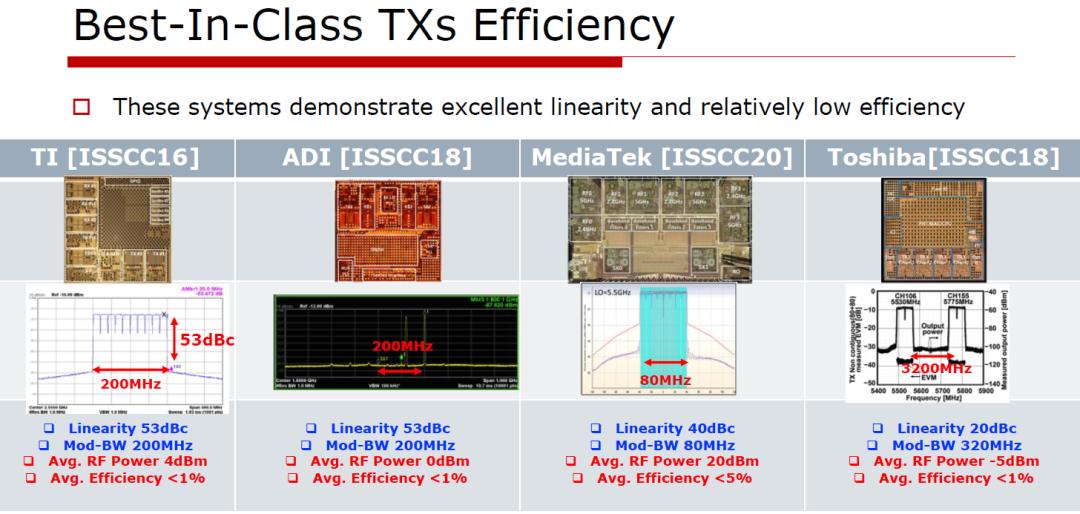
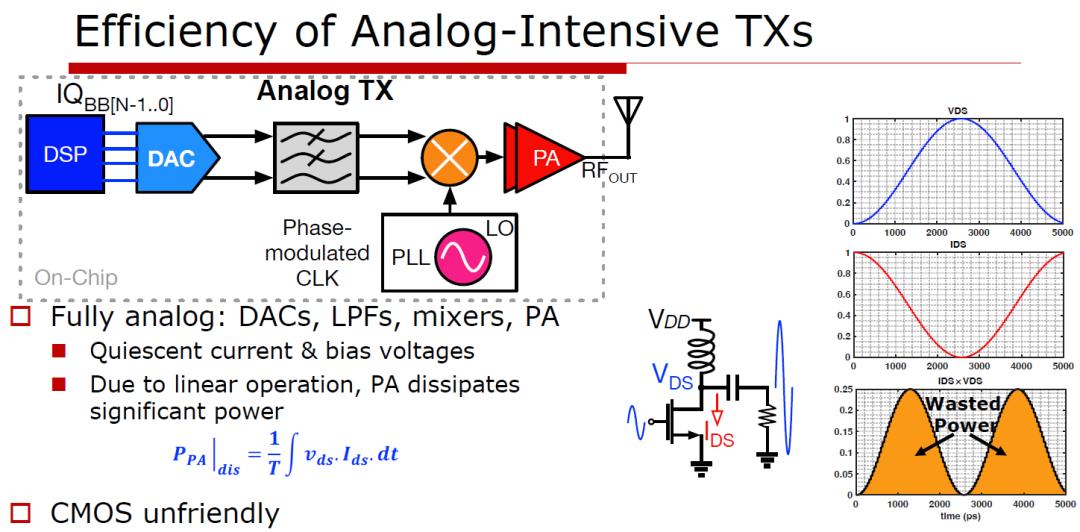
A transmitter moves digital baseband data up to an RF carrier while delivering enough output power. Traditional chains therefore include DSP, DAC, LPF, Mixer/Modulator, LO/PLL, and PA. The report scores them on three dimensions: energy efficiency, spectral efficiency, and spectral purity.
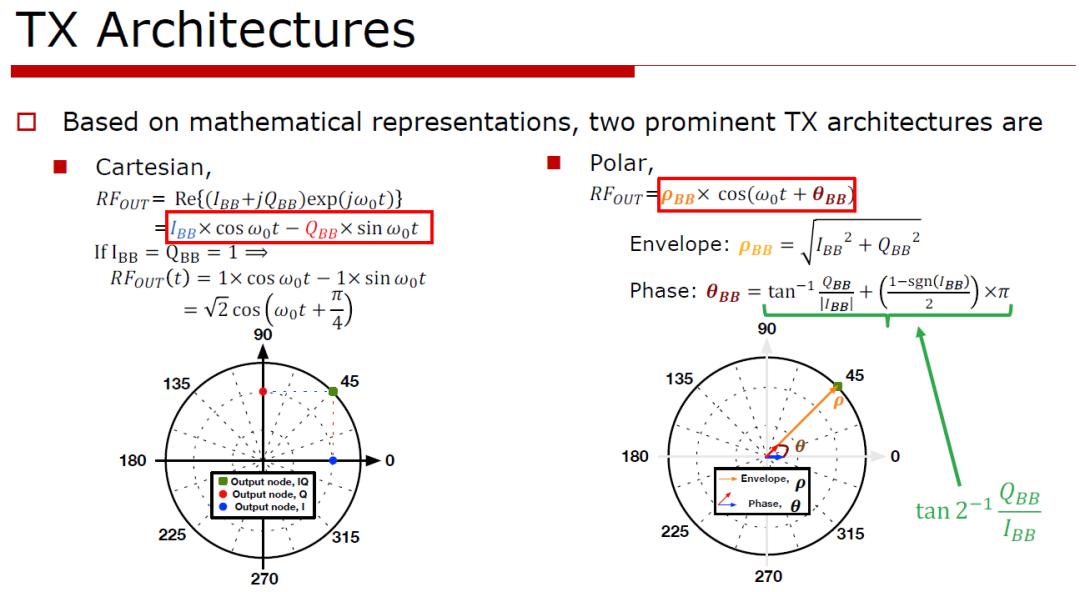
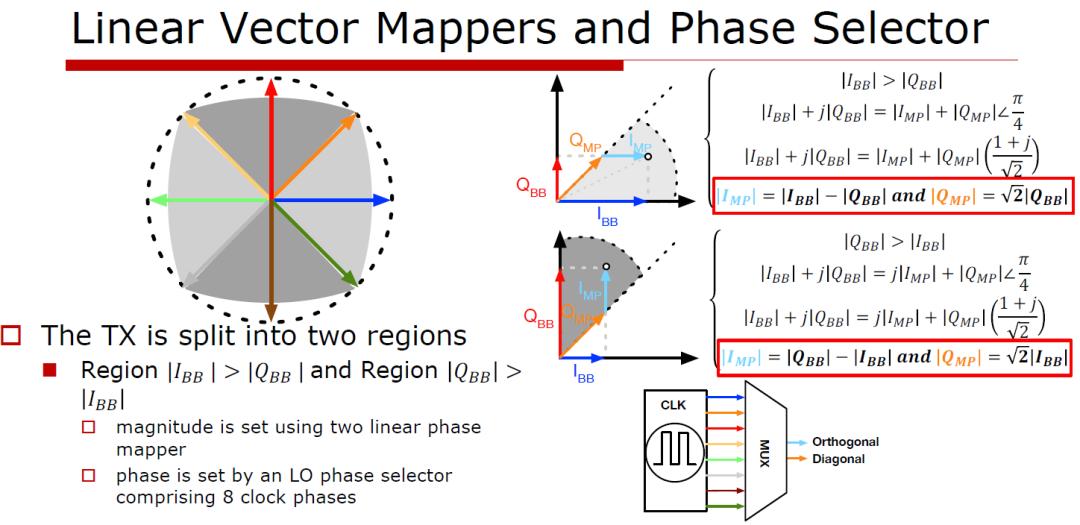
At the architecture level it compares three main design routes.
| Architecture | Efficiency | Linearity | Bandwidth |
|---|---|---|---|
| Cartesian TX | Low | Ultra-linear | Ultra-wideband |
| Polar TX | High | Nonlinear | Narrowband |
| Eight-Phase TX | High | Linear | Wideband |
Cartesian architecture stands out for linearity and wideband capability but is relatively inefficient. Polar architecture can use a switching PA for high efficiency, yet its nonlinear processing causes bandwidth expansion that limits wideband performance. Eight-Phase TX tries to merge the strengths of both, seeking a new balance among efficiency, linearity, and bandwidth. This is also a system-design problem that shapes component choices from the antenna through to the analog/RF front end — the same front-end discipline Aomway applies to its drone datalinks.
Why Doherty PA Rescues Efficiency Under High PAPR
High-spectral-efficiency modulation such as QAM and OFDM has a non-constant envelope and a high PAPR (peak-to-average power ratio). The PA therefore cannot sit at its maximum output point and spends much of its operating life in power back-off (PBO), where average efficiency collapses.
A typical figure quoted in the report: at 6 dB PBO, a conventional PA’s efficiency can drop to about half its peak value. Two efficiency-enhancement routes are highlighted. Supply modulation / envelope tracking lowers the supply voltage dynamically to improve back-off efficiency. Load modulation / Doherty PA instead changes the load impedance the amplifier sees, so it keeps a high voltage swing even in back-off.
The report focuses on the 2-Way Doherty PA, which sustains high efficiency around 6 dB PBO and can be extended to N-Way structures. For long-range control and video links like those Aomway designs, that efficiency gain directly extends usable transmit power.
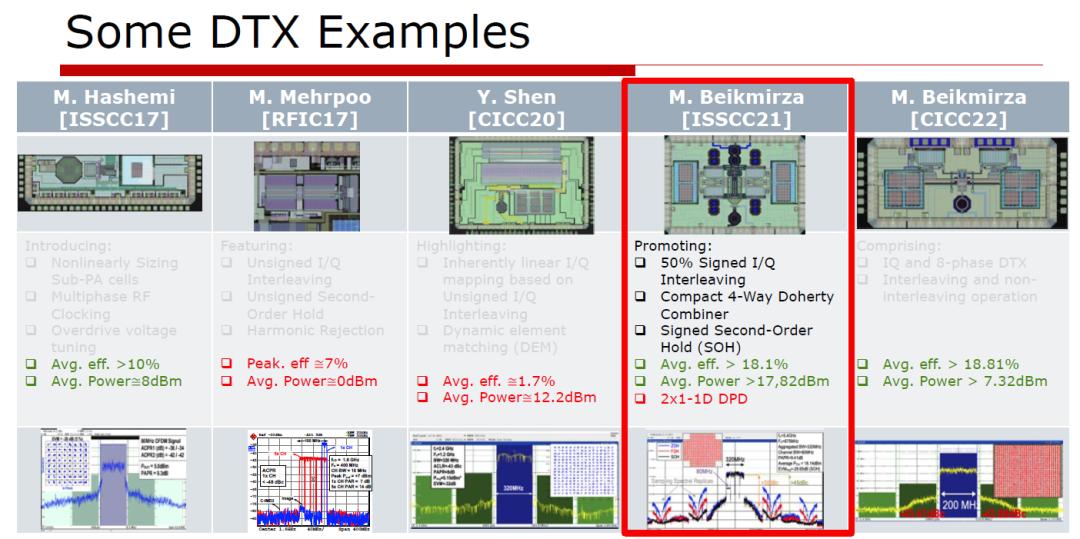
Four Core Problems Facing Modern Transmitters
The report summarizes the key bottlenecks of a conventional transmitter very clearly.
1. LO leakage and IQ image. Amplitude and phase mismatch between the I and Q paths creates images and LO leakage; a Double-Quadrature I/Q Modulator is proposed to suppress them.
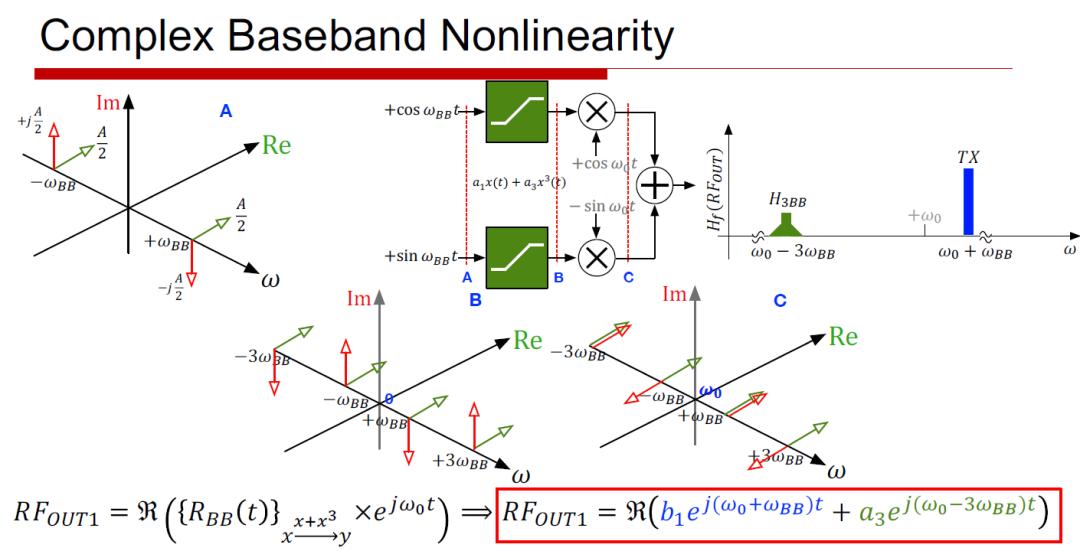
2. TX/PA nonlinearity. Once the PA enters compression it generates AM-AM and AM-PM distortion, driving spectral regrowth, adjacent-channel leakage, and EVM degradation. Digital Predistortion (DPD) is the primary compensation tool.
3. Average efficiency. Addressed mainly through efficiency-enhanced TX techniques such as Doherty.
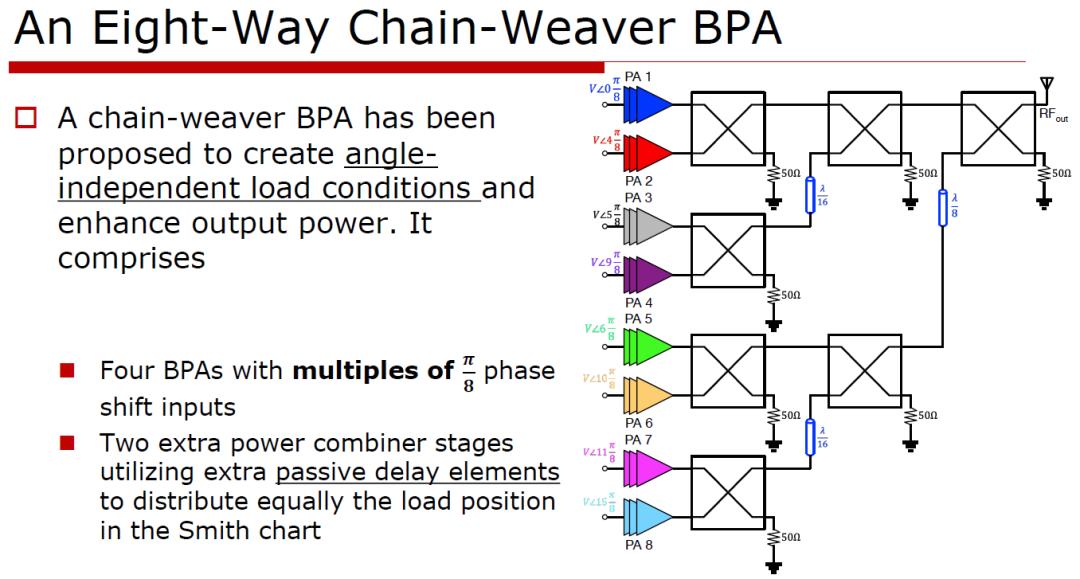
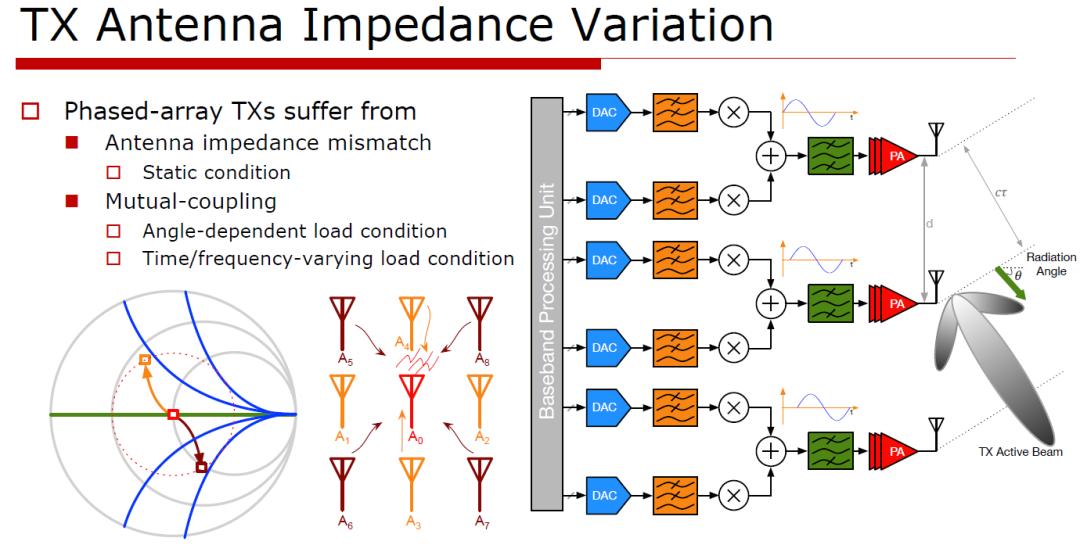
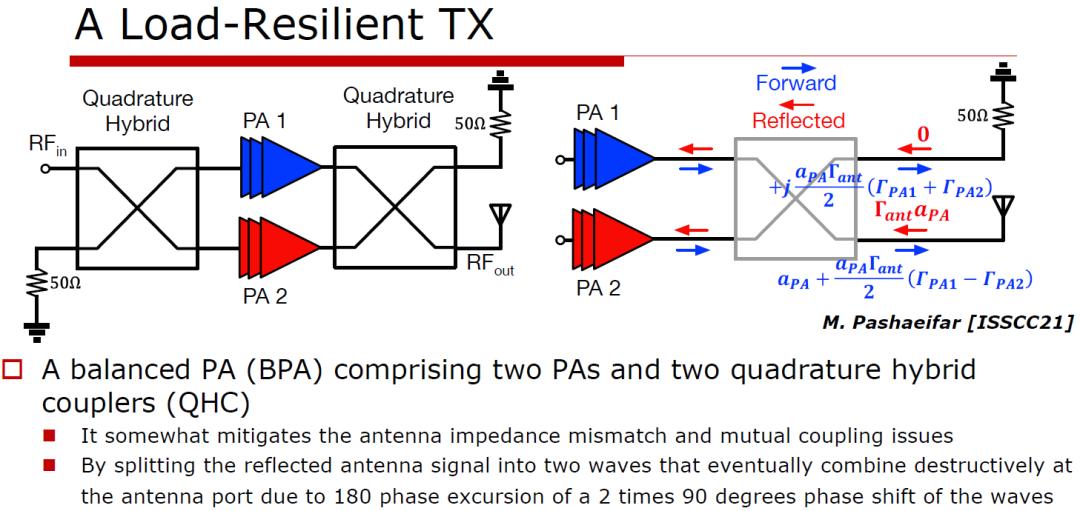
4. Antenna impedance variation. In phased arrays, mutual coupling between elements and beam-scan angle changes alter the load the PA sees, so load-resilient architectures such as Balanced PA and Chain-Weaver PA are introduced.
Together these build a complete optimization loop: problem, then circuit architecture, then digital compensation.
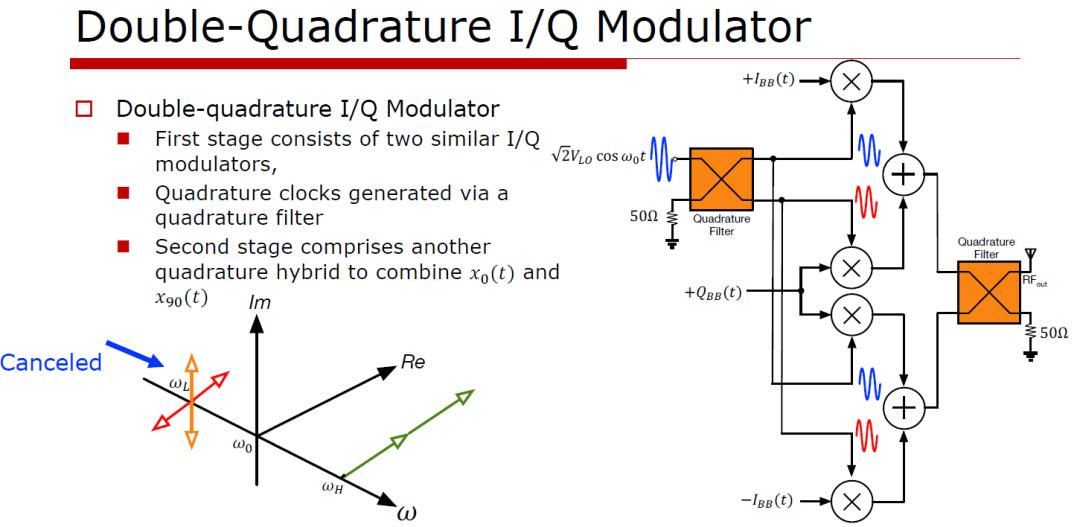
The Real Story: Transmitters Are Going Digital-Intensive
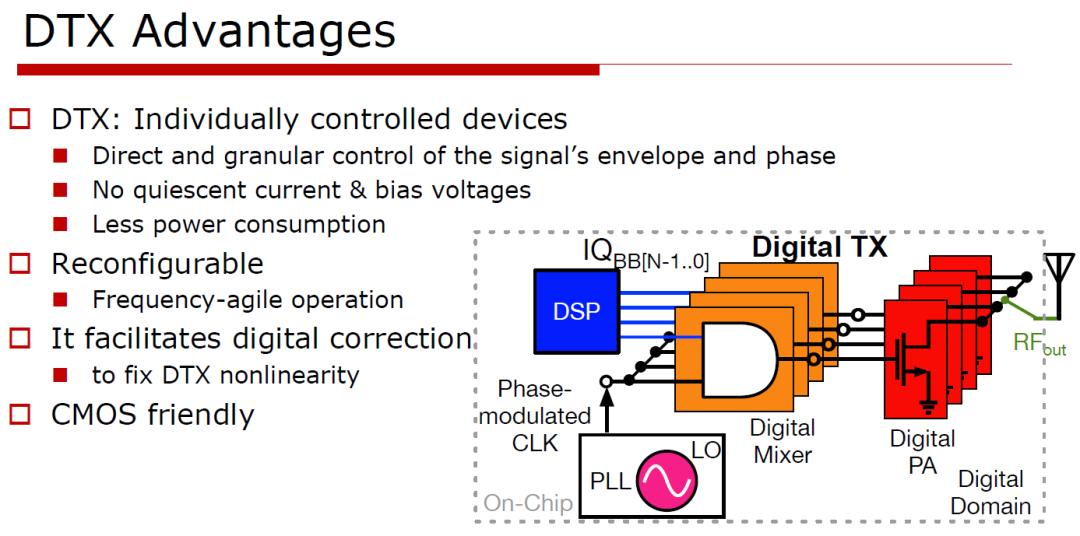
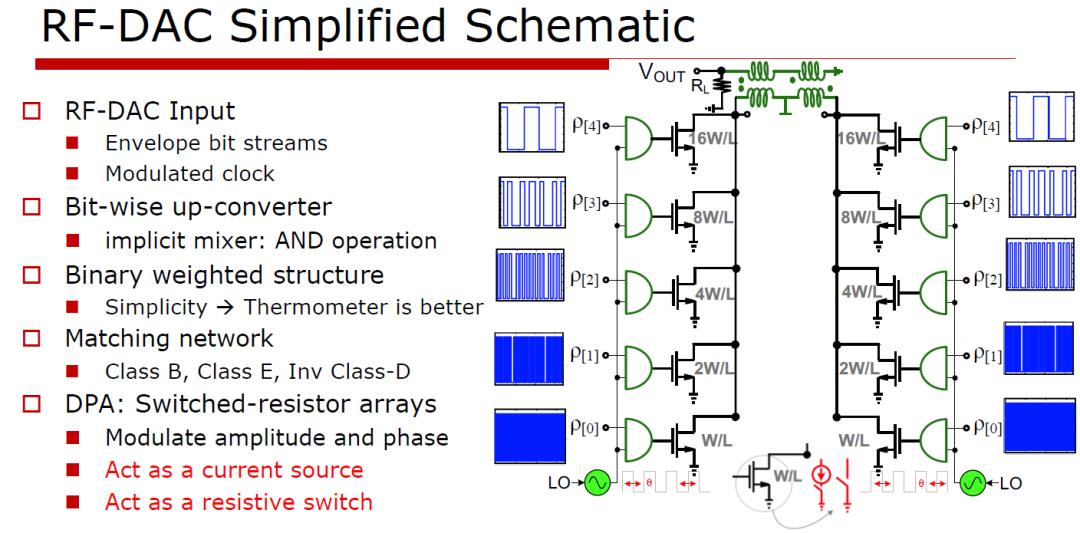
The heart of the report is the Digital-Intensive Transmitter (DTX). A traditional chain runs DSP, then DAC, then LPF, then Mixer, then PA. DTX fuses the DAC, filter, mixer, and even part of the PA into an architecture resembling RF-DAC / Power DAC / Mixing DAC: bits in, RF out.
In other words, digital baseband data controls RF output power more directly. A DTX is typically built from a digital filter, a bit-wise upconverter, a power-DAC switch, and a matching network. It can operate in a higher Nyquist zone and exploits advanced CMOS process scaling. Its core value includes direct and fine-grained control of RF output power, switch-mode efficiency, nano-CMOS process gains, and DSP flexibility across every TX stage.
This reflects a major direction for RF chips: functions once handled by analog/RF circuits migrate toward digital algorithms, digital control, and digital RF architecture. The same RF link concepts show up across modern systems, from frequency-hopping control links to full RF and multi-sensor fusion designs — a direction Aomway follows in its high-bandwidth OFDM datalinks.
But DTX Brings Five New Technical Challenges
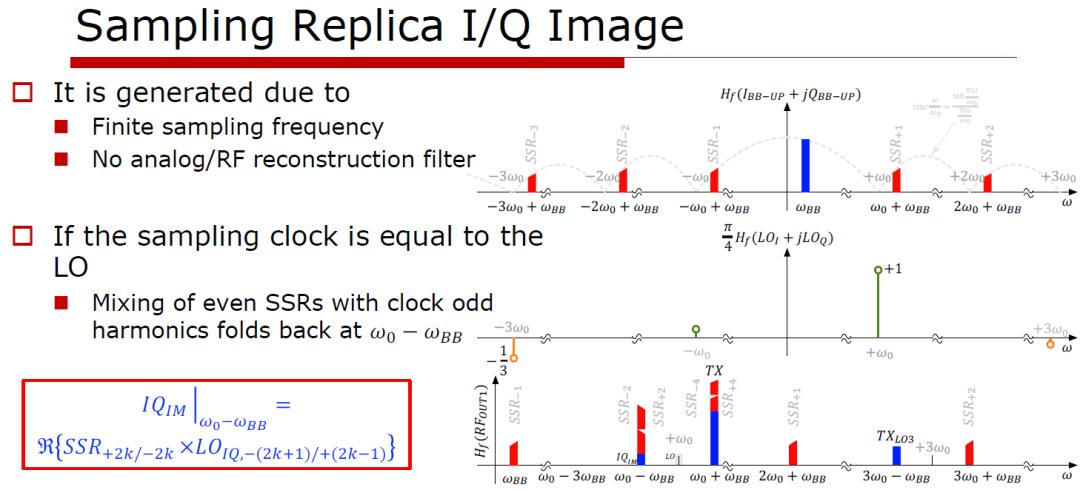
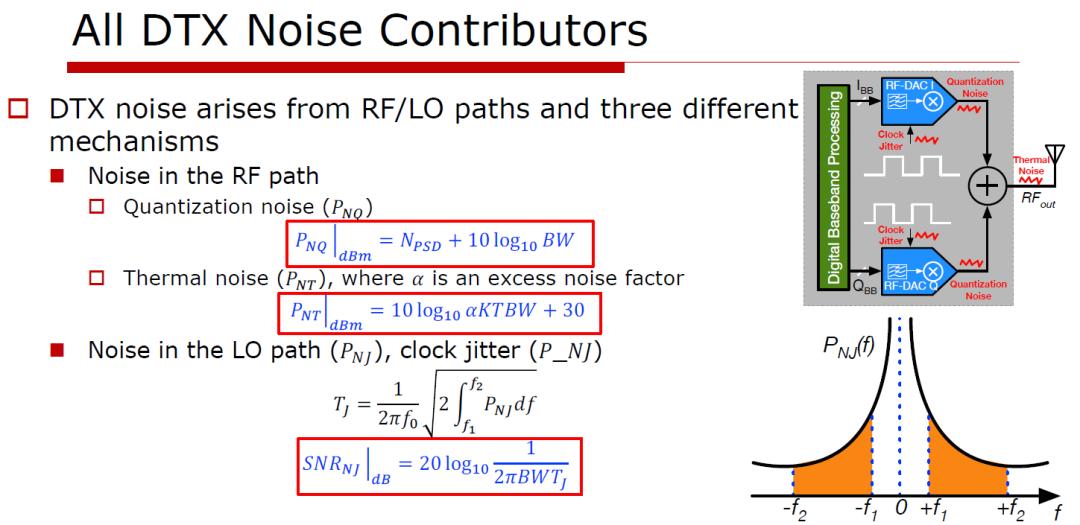
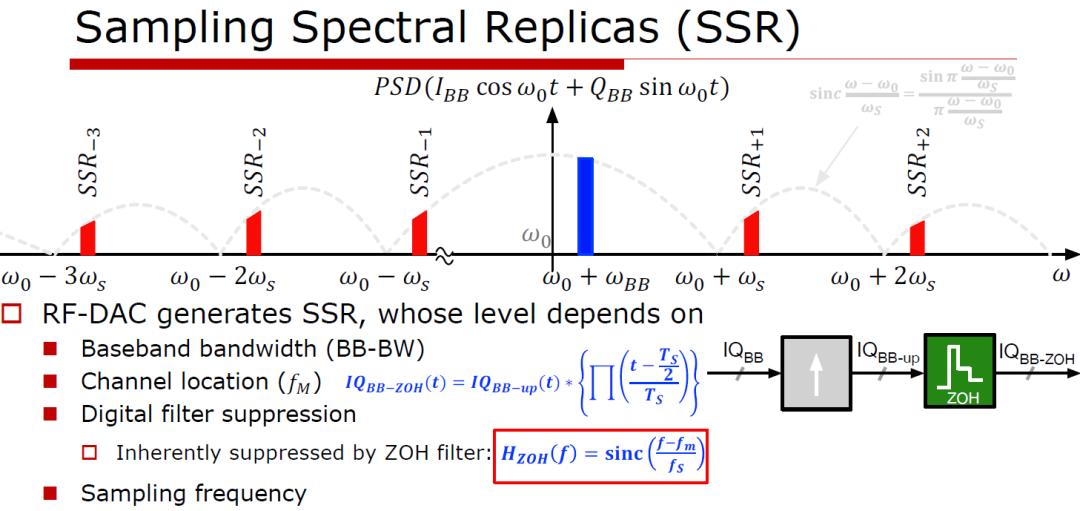
Digitization is not a free lunch. The report analyzes the problems that RF-DAC / DTX introduces: quantization noise, TX noise, sampling spectral replicas, odd-order close-in distortion, and sampling replica I/Q image.
Noise arrives via both the RF and LO paths, including quantization noise, thermal noise, and clock jitter. As TX digitization deepens, the importance of clocking, sampling, quantization, digital interpolation, and spectral-image control rises in step.
The report’s stance is not “digital replaces analog.” Digitization adds controllability and efficiency while converting old analog-RF problems into new digital-RF co-design problems.
Case Study: The 4-Way Doherty DTX
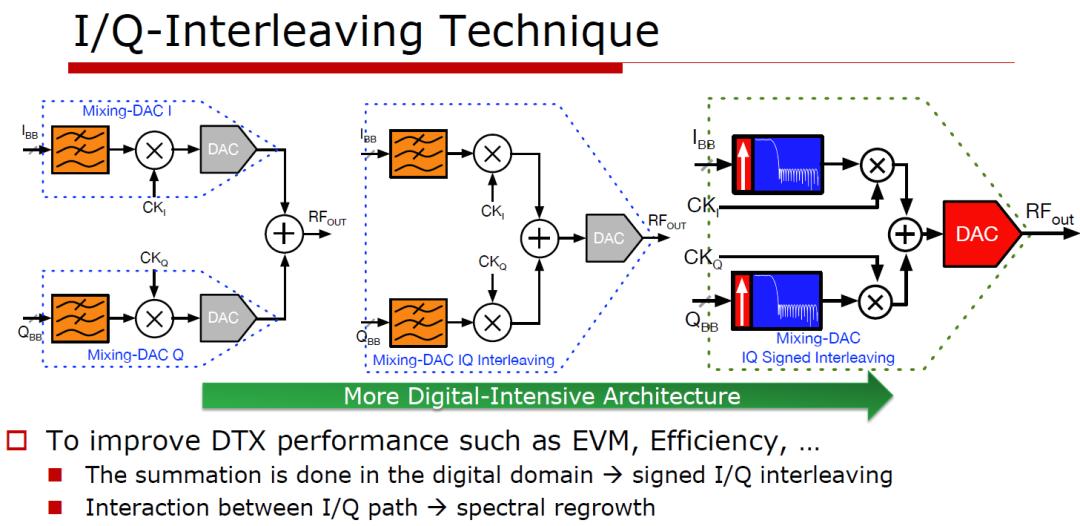
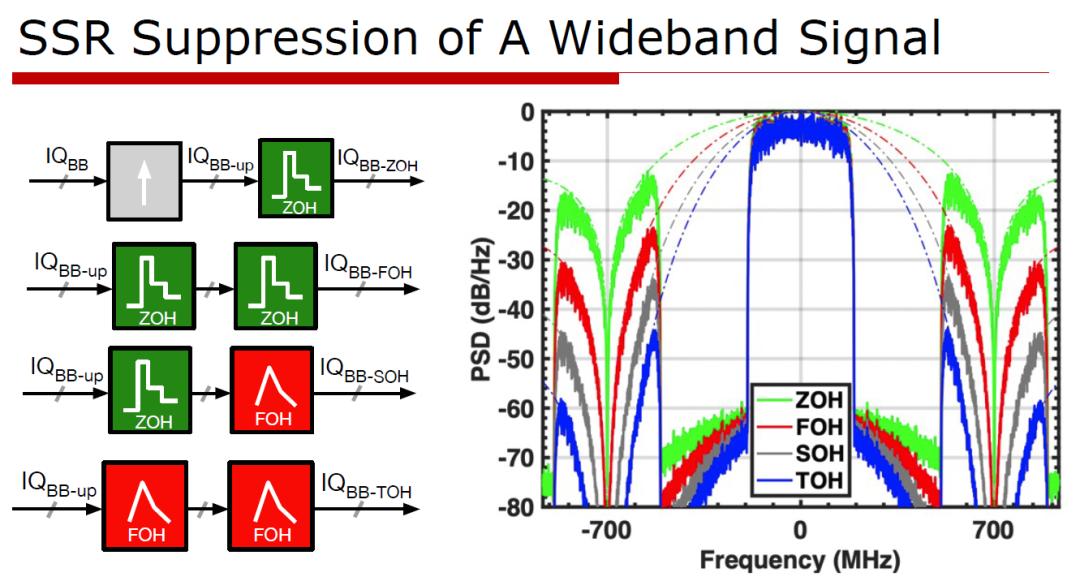
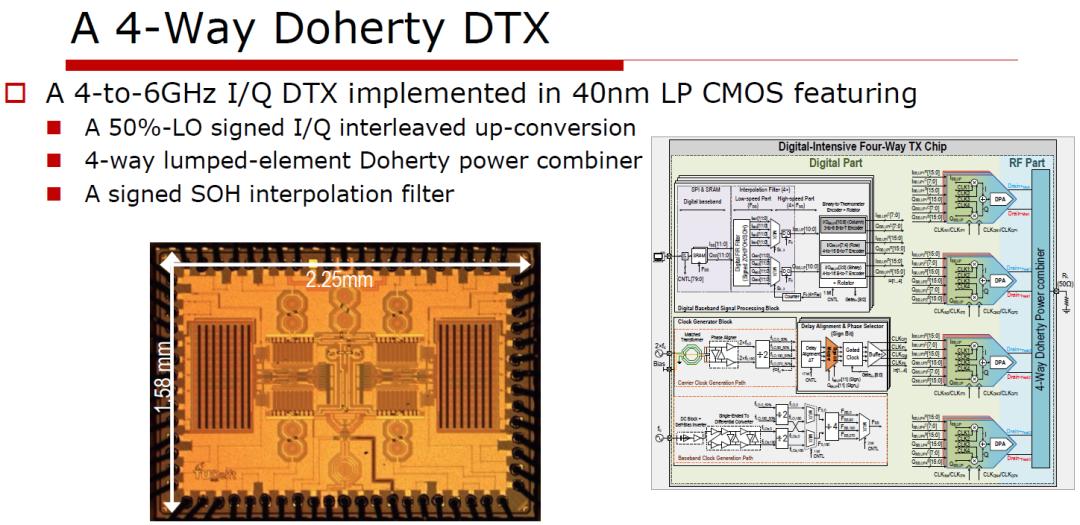
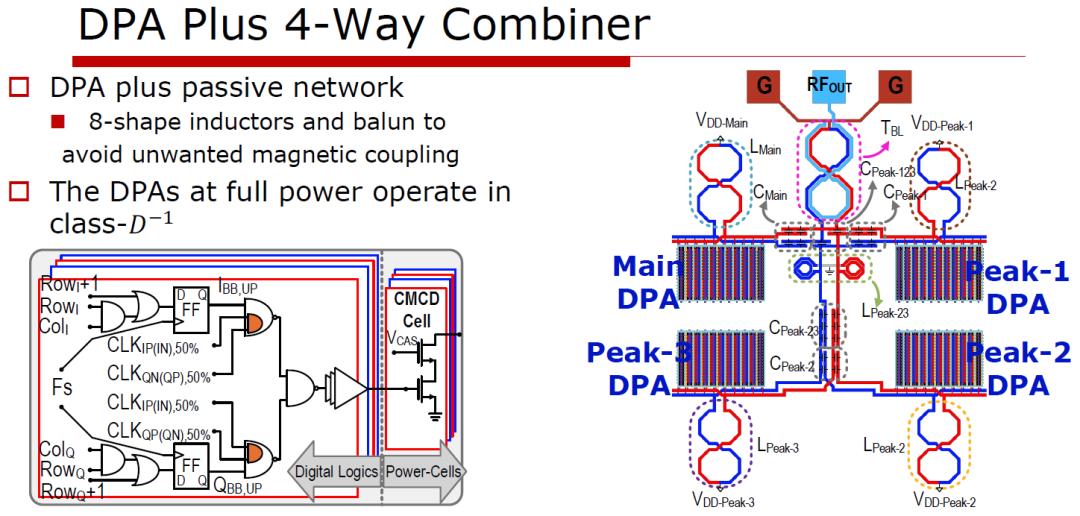
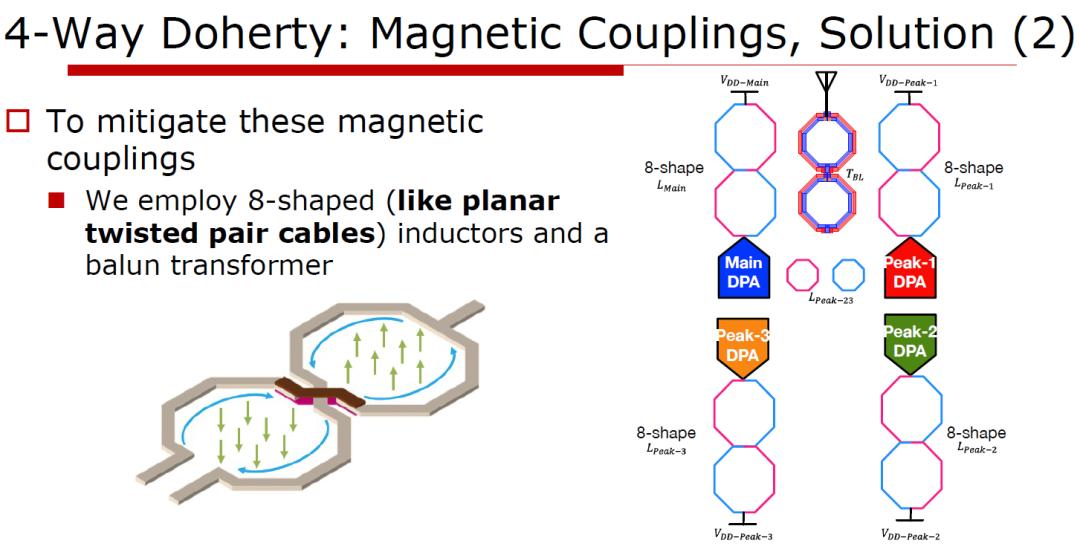
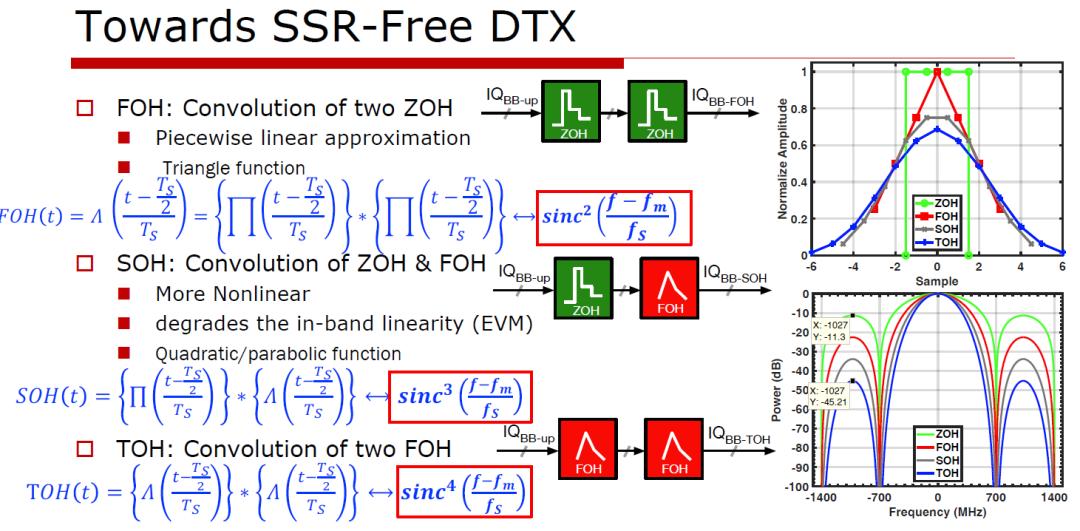
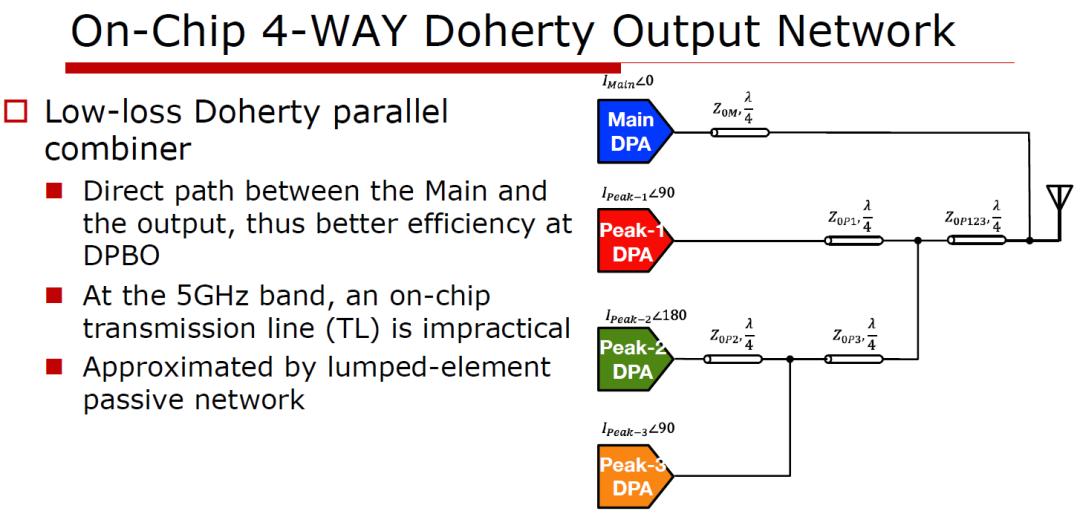
The report closes with a full example: a 4-Way Doherty DTX implemented in 40nm LP CMOS and operating from 4-6 GHz. It combines three techniques: 50%-LO signed I/Q interleaved up-conversion, a 4-Way lumped-element Doherty power combiner, and a signed second-order hold (SOH) interpolation filter.
Each maps to one DTX problem. Signed I/Q interleaving improves I/Q image, LO leakage, and CIM3. The 4-Way Doherty improves average efficiency in the power back-off region. The signed SOH filter suppresses sampling spectral replicas.
Measured results are representative: I/Q image, LO leakage, and CIM3 below -62 dBc, average efficiency above 20%, SSR suppression better than -40 dBc for a 320 MHz signal, and peak output power above 27 dBm at 5 GHz.
Summary
The next generation of wireless transmitters is moving from an analog/RF-dominated architecture toward digital-assisted, digital-intensive RF. Through Doherty, DPD, I/Q interleaving, multiphase architectures, and RF-DAC, designers are hunting a new balance across high bandwidth, high linearity, high output power, and high energy efficiency. Aomway’s RF and datalink roadmap is built on the same principles.
Have questions about this article? Feel free to contact us at [email protected] — we’re happy to help!
Frequently Asked Questions
What is a Doherty power amplifier?
A Doherty PA uses load modulation, dynamically changing the impedance the amplifier sees, so it stays efficient in power back-off. A 2-Way Doherty PA holds high efficiency near 6 dB PBO, where a conventional PA can fall to about half its peak efficiency.
How does digital predistortion improve an RF transmitter?
DPD applies the inverse of the PA’s nonlinearity before the signal reaches the amplifier, correcting AM-AM and AM-PM distortion. This suppresses spectral regrowth and adjacent-channel leakage while improving EVM, letting the PA run closer to its efficient region.
What is an RF-DAC or Digital-Intensive Transmitter?
An RF-DAC / DTX fuses the DAC, filter, mixer, and part of the PA into a single digital-intensive block: bits in, RF out. Digital baseband data then controls RF output power directly, adding fine-grained control, switch-mode efficiency, and CMOS-scaling benefits.
Why is PAPR a problem for power amplifiers?
High-PAPR signals such as OFDM and QAM force the PA to back off from peak power to stay linear. At 6 dB PBO the efficiency of a conventional PA can drop to roughly half its peak, which is why Doherty and envelope-tracking techniques matter so much.
What performance did the 4-Way Doherty DTX achieve?
The 40nm LP CMOS 4-Way Doherty DTX operating at 4-6 GHz reached I/Q image, LO leakage, and CIM3 below -62 dBc, average efficiency above 20%, SSR suppression better than -40 dBc for a 320 MHz signal, and peak output power above 27 dBm at 5 GHz.
About Aomway
Aomway is a professional supplier of RF and video-link systems for drones and unmanned platforms, best known for its fiber-optic and high-bandwidth OFDM datalinks and FPV video transmitters. Alongside its products, Aomway publishes technical explainers that help engineers keep pace with the RF transmitter architectures shaping modern wireless design.
