Key Takeaways
- Micro turbojet engines are not scaled-down large engines: below roughly 100 daN, Reynolds number, tip clearance and combustor residence time change the whole design logic.
- China’s first full technical chain in this field came from Northwestern Polytechnical University’s W2P-1 prototype, rated near 108 daN, debugged in the early 1990s.
- Imported commercial engines from Germany’s JetCat, the Netherlands’ AMT and the United States’ Williams shaped Chinese product-engineering thinking, including ECU-based digital control.
- Military demand drove the four-stage progression from performance to reliability to environmental adaptability to batch production.
- As of 2026, private companies compete on cost, consistency and delivery rather than on single-point performance gains.
A micro turbojet engine is a deceptively narrow field: its difficulty is asymmetrical. No single technology inside it looks spectacular, yet the whole machine rests on a dozen simultaneous engineering lines — high-speed rotor dynamics, combustion stability, bearing lubrication, sealing, fuel metering, automatic control, dynamic balancing, high-temperature materials, test rigs and batch consistency. China’s micro turbojet engine industry was built by five converging technology routes rather than one, and understanding them explains why the sector now competes on engineering closure instead of prototype performance.
1. The Asymmetrical Difficulty of Micro Turbojets
- Falling Reynolds number: as characteristic size shrinks, viscous effects grow, profile and secondary-flow losses rise, and the achievable efficiency ceiling drops below that of a large engine on the same thermodynamic cycle.
- Lower compressor efficiency: blade height becomes tiny, end-wall and tip-clearance effects dominate, and axial compressors can barely hold usable stage efficiency — which is why micro turbojets almost universally switch to centrifugal compressors.
- Stronger relative wall effects: the surface-to-volume ratio grows, so friction and heat exchange with walls take a larger share of performance.
- Sharply reduced combustor volume: shorter residence time makes flame stability and complete combustion harder, raising the bar for atomization, evaporation and mixing.
- Higher heat-loss fraction: with more radiating area, the usable energy fraction drops even at identical turbine inlet temperature.
- Bearing and rotor problems: extremely high rpm amplifies bearing load and heat, making lubrication, cooling and life the gatekeepers of usability.
- Much higher rotor speed: maintaining compressor work at small size pushes rotors to tens of thousands or even over 100,000 rpm, making rotor dynamics, critical speed, balancing and blade strength the primary design lines.
- Larger relative manufacturing error: the same few microns that are negligible on a large blade can shift aerodynamics and unbalance a micro impeller, so machining consistency is brutally demanding.
For a look at how extreme propulsion ideas get tested on far smaller airframes, see our article on the world’s fastest RC plane, and for the operating logic behind long-range one-way designs, our breakdown of why the Shahed-136 loitering munition flies so far.
2. Route One: Extending Aero Gas Turbine Theory to Micro Scale
China’s true technical origin was not model-aircraft engines but the classical aero gas turbine system extended toward small scale. Large engines already established the full cycle — intake, compression, diffusion, combustion, turbine expansion, nozzle exhaust. Micro turbojets compress that cycle into a very small envelope, where “scale effects” make a mere shrunken large engine unworkable.
Public literature generally classifies turbojets below about 100 daN as micro turbojets, with a typical architecture of a single-stage centrifugal compressor, an annular combustor and a single-stage axial turbine — still the dominant international layout today.
The representative early Chinese effort was the micro aero engine research institute at Northwestern Polytechnical University. Public records show that during the “8th Five-Year Plan” period it developed the W2P-1 demonstration prototype with a design thrust of about 108 daN, and completed debugging in the early 1990s.
The significance was not a specific model but the first complete chain in China: cycle analysis, aerodynamic design, structural design, manufacturing and test. Cycle analysis decides whether the thermodynamic process can theoretically hold; aerodynamic design decides whether the flow path can realise it; structural design decides whether parts survive the speed and temperature; manufacturing decides whether the drawing becomes hardware; testing decides whether the assembled engine runs stably. The first root of Chinese micro turbojet technology is therefore: traditional aero engine technology → small gas turbine → micro turbojet engine.
3. Route Two: Importing Mature Foreign Micro Turbojet Products
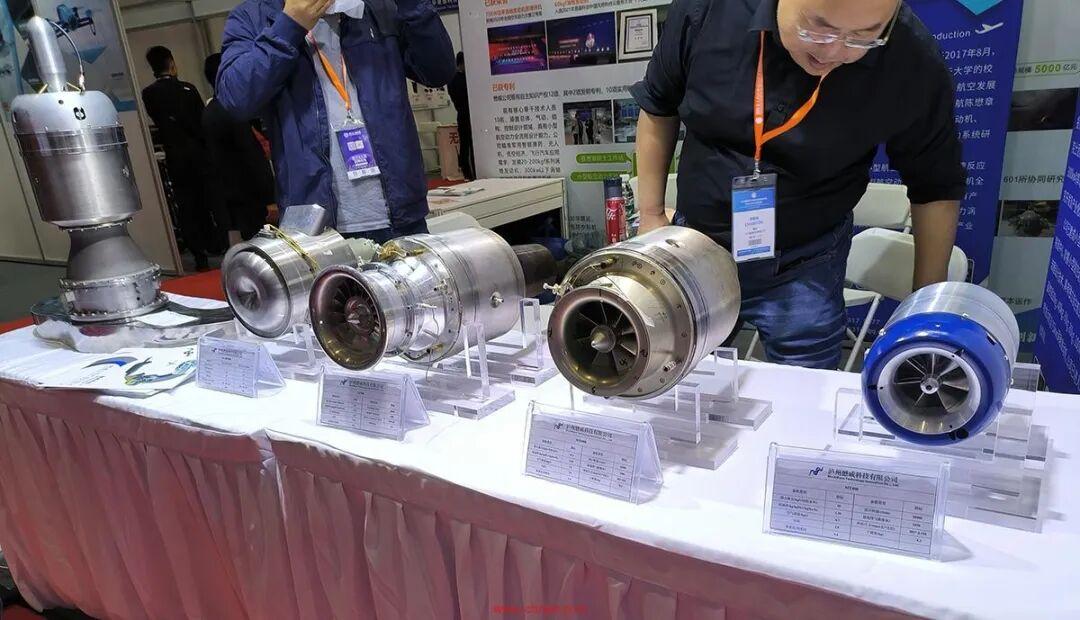
The second major source was the influence of mature foreign products and product systems — arguably the key driver that moved China quickly toward practical use. Unlike large aero engines, whose market is monopolised by a few national giants and closed as complete systems, micro turbojets are small, widely used and moderately priced, so a mature commercial market formed abroad early.
Companies such as Germany’s JetCat, the Netherlands’ AMT and the United States’ Williams built fairly complete product lines — from core engines to matching ECUs, from fuel pumps to starting power supplies, from ground test benches to airframe accessories — almost all available as off-the-shelf items. Chinese papers also treat these firms as important representatives of international micro turbine development.
What these products brought China was less a specific engine than product-engineering thinking: a systematic understanding of what a micro turbojet should look like, how it should be used and how it should be maintained. That thinking shows up in four layers: the single-stage centrifugal compressor became mainstream; the high-speed rotor became the core; electric starting became the engineering standard; and the ECU became part of the engine itself. Micro turbojets were among the earliest members of the gas turbine family to make digital control standard, extending the idea of an “engine” from a heat machine into a complete functional system.
4. Route Three: Borrow, Re-model, Re-design
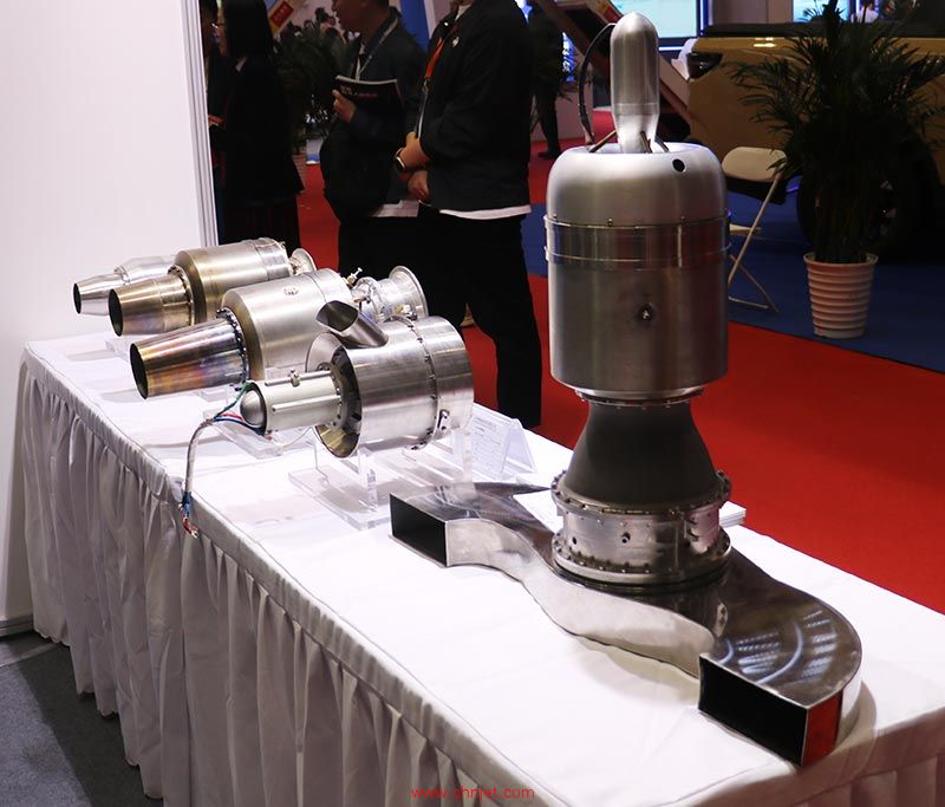
Describing China’s development as purely independent is inaccurate. The realistic description is: independent theoretical basis + influence of mature foreign architecture + domestic product reference + engineering re-modelling + further innovation. The reason is simple — a micro turbojet spans a dozen subsystems, each needing dedicated knowledge and test facilities, so starting from zero carries prohibitive cycle time and trial cost.
This is not simple copying. The dividing line is that copying transfers drawings and parameters, while borrowing means understanding the layout logic and then re-running the full design process with one’s own methodology. The engineering sequence is typically: structural reference → independent modelling → parts localisation → process adjustment → performance testing → problem exposure → local re-modelling → serialisation. Each step is substantial work: aerodynamic calculation, structural checking and strength analysis must be redone; localisation means substituting materials, processes and supply chains; and faults exposed in testing — surge, over-temperature, bearing wear, combustion instability — each demand targeted re-modelling that in turn settles into new design rules.
Public patents already show sustained Chinese exploration in compressor structure improvement, double-sided centrifugal impellers, fuel atomisation, starting systems, electrical generation, turbine structure and combustor structure. The pattern is a gradual move into original work on concrete engineering problems, where each solved problem adds know-how that cannot be copied from drawings. Real localisation means design autonomy, manufacturing autonomy, test autonomy, supply-chain autonomy and batch-delivery autonomy; the first three answer “can it be built” and the last two answer “can it be built continuously”. Many teams excel at the prototype stage but stumble on manufacturing consistency and supply-chain stability — the threshold that the borrow-and-re-model route must cross.
5. Route Four: Military Demand and Engineering Maturity
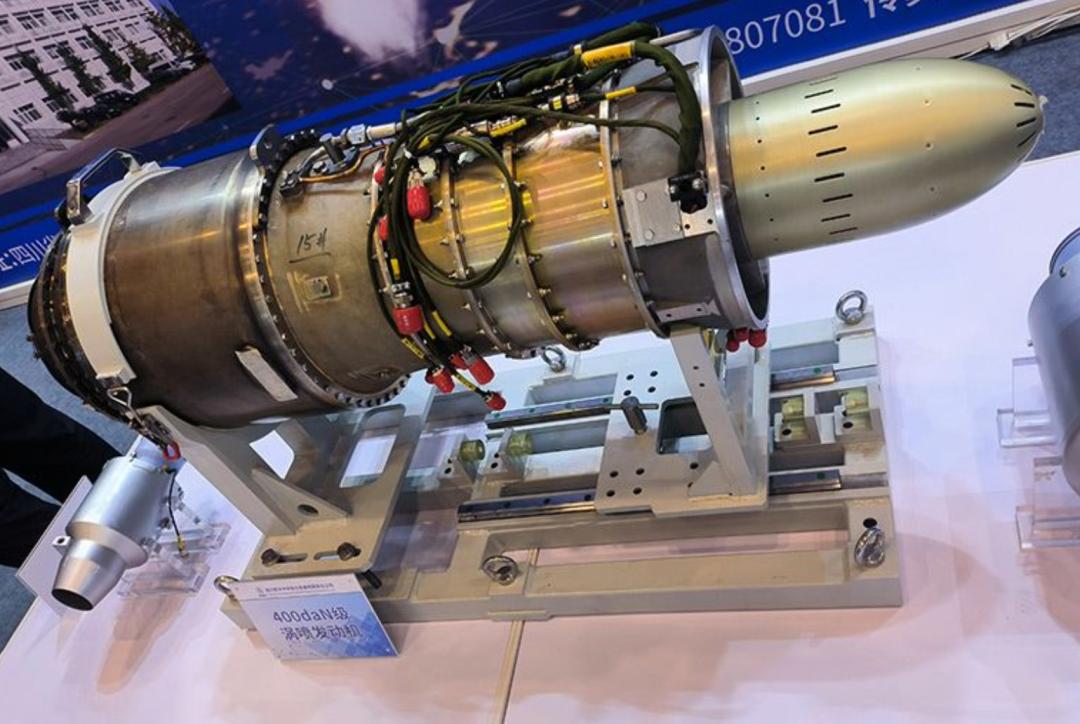
The qualitative change came when military demand entered. Early micro turbojets emphasised starting, stable running and thrust — achievable in a laboratory but far from equipment-ready. Real aviation applications added requirements: stable, reliable, mass-producible and able to survive low-temperature starts, high-altitude relight, manoeuvre loads, humid salt fog and first starts after long storage.
Chinese participants now span universities, research institutes and the aerospace and military-industrial system, including the Institute of Engineering Thermophysics at the Chinese Academy of Sciences, Beijing Power Machinery Institute, Northwestern Polytechnical University, Nanjing University of Aeronautics and Astronautics and related aerospace entities.
Recent disclosures from Factory 7304 of the Seventh Academy of China Aerospace Science and Technology Corporation show that micro turbojets below 100 kg-class have become an important product direction for actual equipment power. Its public reporting notes that engines below 200 kg fall within the micro turbojet range, and that 100 kg-class engines are important powerplants for small target drones and decoy munitions.
The technology route then shifted through four stages: first performance (“can it reach design thrust?”), then reliability (“can it run stably?”), then environmental adaptability (“can it work across altitude, temperature and flight states?”), and finally batch production (“can it be built in hundreds, thousands or more, consistently?”). What the military system truly contributed was not just better performance but maturation of the whole design → process → test → quality → delivery chain. Performance sets the upper bound on paper; system maturity sets the lower bound of delivered product, and for equipment the lower bound matters more.
6. Route Five: Private Companies and Low-Cost Power Products
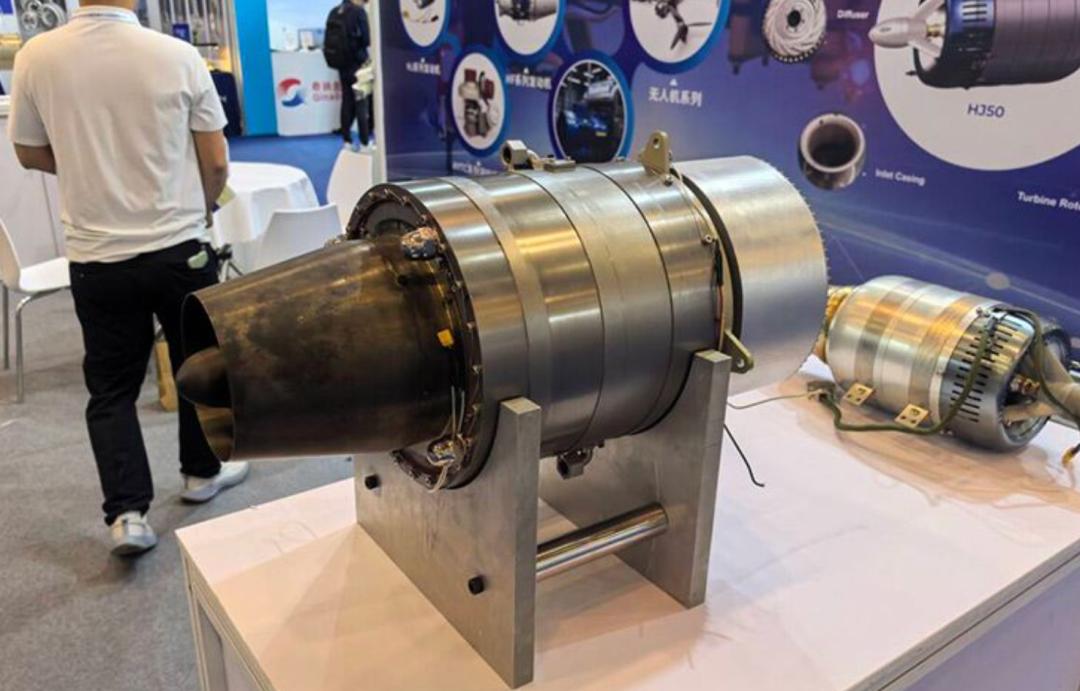
Over the past decade or so, private companies entered in large numbers, driving a second shift in the technology route. Research institutes had focused on pressure ratio, efficiency, thrust, combustion efficiency, materials and thermodynamic cycles — the “performance language”. Companies began to focus on cost, reliability, production efficiency, maintainability, procurement lead time and batch delivery — the “commercial language”. The routes are not identical: research pursues limits, while products pursue a stable, reproducible sufficiency.
Public patents show Chinese firms optimising concrete engineering problems such as fuel atomisation, starting, electrical generation and compressor structure — a clear productisation route. The old question was “how do we make a high-performance engine?”; the new question is increasingly “how do we make an engine that is good enough, cost-controlled, consistent and continuously deliverable?”
Performance-oriented research tolerates more complex structures, more expensive materials and longer cycles for one or two percentage points of efficiency. Product-oriented development re-tests every design trade-off against cost and reliability, because one more part means one more failure point and one more cost. For small unmanned aircraft, once engine procurement volume rises, competitiveness depends not on a few extra points of single-point performance but on unit cost, production cadence, consistency, first-start success rate, mean time between failures, maintenance convenience and supply-chain stability. Individually these metrics are unglamorous; together they decide whether users can afford to buy, operate and repair in volume. Private companies are pushing micro turbojets from research products into standardised power commodities.
7. Today: Five Routes Converging
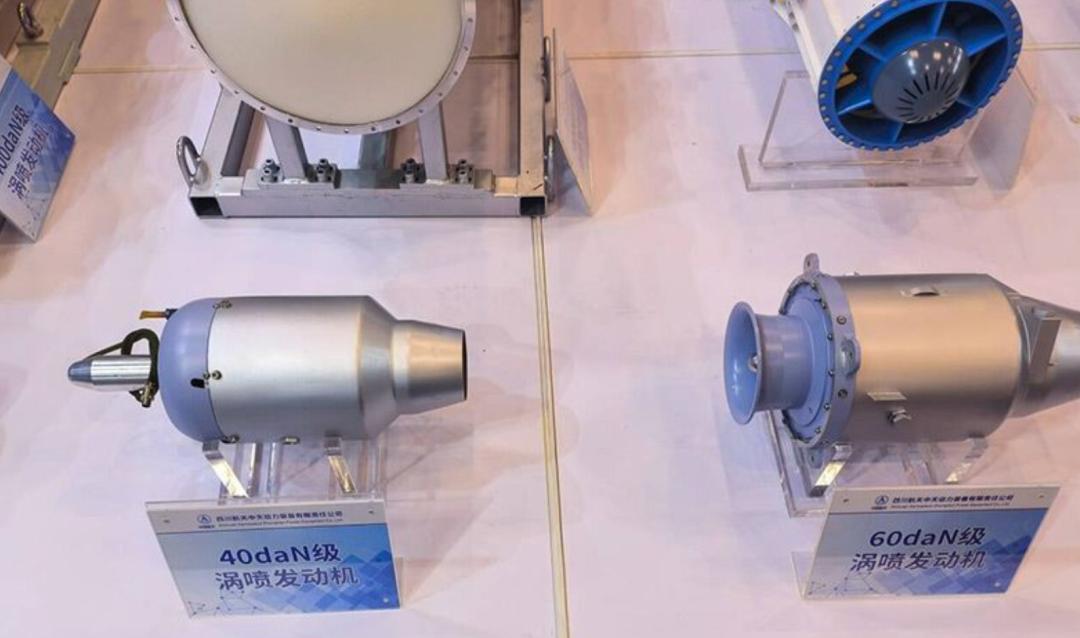
Looking back from today, China’s micro turbojet sector is no longer a single technical source but five converging routes: aero engine theory basis → mature foreign architecture influence → independent university development → military-system engineering → private-company productisation → domestic supply-chain scaling. These layers are not a simple timeline but a mutually supporting structure: theory provides the underlying method, foreign architecture provides the reference frame, universities provide talent and exploration, the military provides engineering and demand pull, private companies provide productisation and marketisation, and the domestic supply chain grounds all of it in deliverable physical reality.
From a product-technology angle, the routes can be summarised as follows. Hardware teams facing the same build-versus-buy trade-offs at component level often start from our open-source flight controller hardware selection guide:
| Technology Route | Core Characteristic | Technical Source |
|---|---|---|
| Traditional single-stage centrifugal | Simple structure, high maturity | Mature international architecture + independent Chinese design |
| High-performance centrifugal compressor | Emphasis on pressure ratio and efficiency | Aero engine theory + Chinese optimisation |
| Composite impeller | Highly integrated compressor and turbine | Independent Chinese exploration |
| High-integration start/generation | Motor handles both starting and power generation | Foreign product influence + Chinese improvement |
| Low-cost batch production | Emphasis on manufacturing, cost and consistency | Private-company productisation |
| Military engineering | Emphasis on reliability, environmental adaptability and volume production | Military-industrial system |
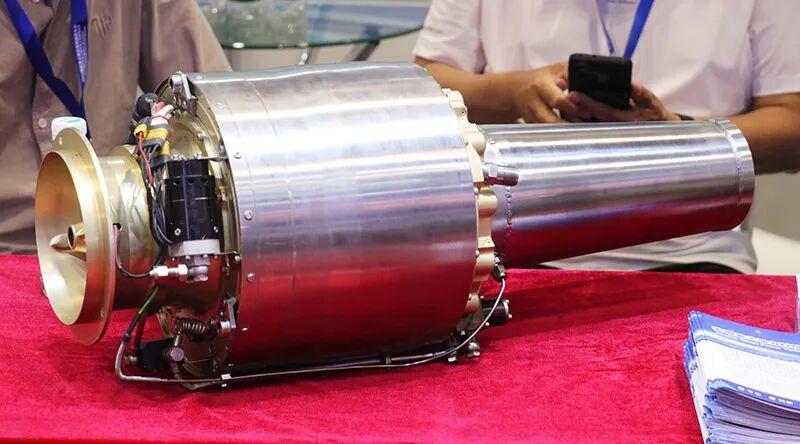
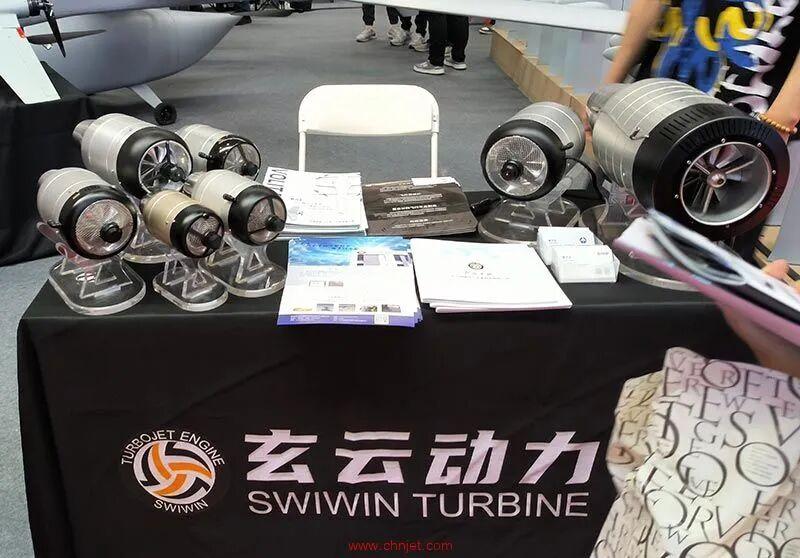
“High performance” and “low cost” have become the two main directions. One pursues higher thrust-to-weight ratio, lower fuel consumption, better altitude characteristics and higher reliability, serving high-performance UAVs with longer endurance and wider flight envelopes, and requiring sustained R&D and heavy test validation. The other pursues lower cost, fewer parts, simpler manufacturing and faster delivery, serving UAV platforms for scaled application, with competitiveness resting on supply-chain organisation, process stability and product consistency. The two may not fully merge, but their convergence point is clear: whichever route is taken, the common engineering endpoint is batch delivery with consistent quality.
8. The Real Watershed: Engineering Closure
The real competitive watershed is not who announced “independent development” first, but who closed the loop across design, machining, materials, dynamic balancing, combustion, control, testing, quality and batch delivery. Anyone can build a prototype; the hard part is making unit 100 as good as unit 1 — and that is precisely the question every self-described independent manufacturer must answer with delivery records.
From this angle, China’s micro turbojet industry is no longer going through simple import substitution; it is advancing from a technology-following stage toward a power-system industrialisation stage. Drilling further down, a more interesting question is which of the dozens of domestic manufacturers are truly independent, which borrow foreign products, which re-model mature domestic types and which already own core technology — because the answer shapes not only each company’s technical standing but the competitive landscape of the next decade.
Appendix: Additional Chinese Micro Turbojet Manufacturers and Models
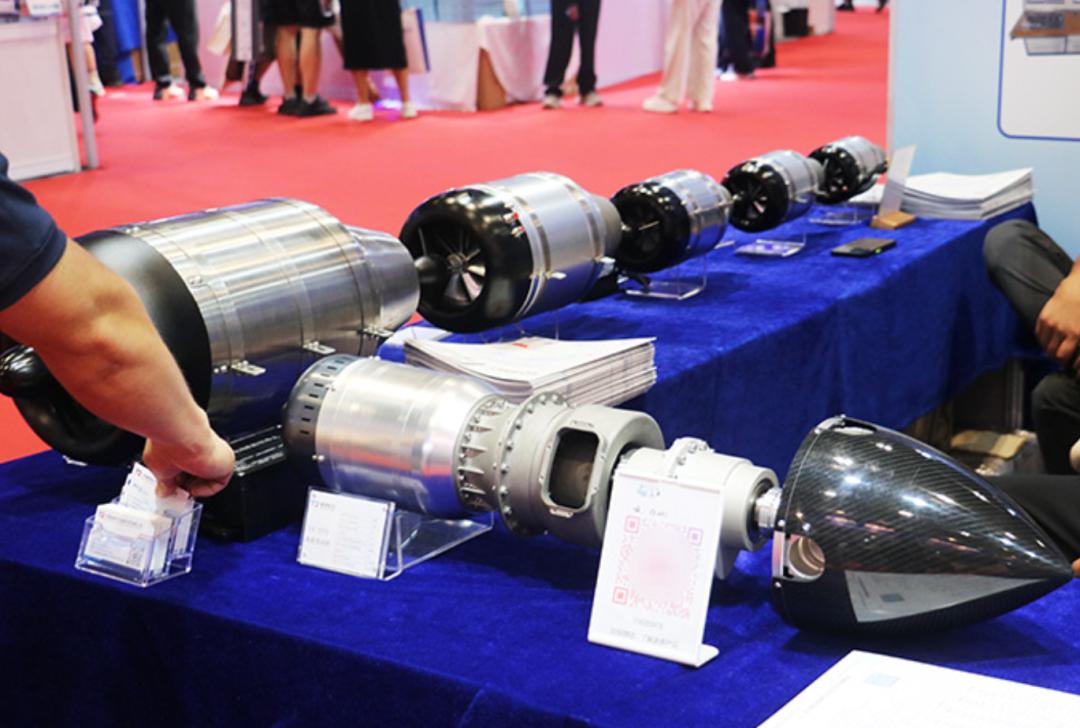
| No. | Company | Location | Turbojet Engine Models |
|---|---|---|---|
| 1 | Beijing Qinghang Aerospace Technology | Beijing | TH-WP40, TH-WP60, TH-WP80, TH-WP100, TH-WP125, TH-WP160 |
| 2 | Beijing Jinpengda Aviation Technology | Beijing | LF40, LF90, LF125, LF150, LF430 |
| 3 | Datong Hangyuan Zhongcheng Power Technology | Datong | 40/45, 55, 80/85, 100/105, 120, 150 kgf class |
| 4 | Shanghai Ruirui Aviation Equipment Technology | Shanghai | LX22, LX30, LX40, LX50, LX80, LX120, LX160 and others |
| 5 | Beijing Aerospace Sanfa High-Tech | Beijing | 48, 160, 165 daN turbojets |
| 6 | Hangzhou Huayi Technology | Hangzhou | EJ120 |
| 7 | Rongtong Aero Engine | Nanjing | CYS-40WP / CYS-80WP / CYS-200WP / CYS-400WP |
| 8 | Institute 31, Third Academy, CASIC | Beijing | CTJ-20, CTJ-40, CTJ-150, CTJ-160; CTJ-1 (110 daN class), CTJ-2 (400 daN class) |
| 9 | Institute 608, AVIC | Zhuzhou | KP12, KP16, KP16-3D |
Have questions about this article? Feel free to contact us at [email protected] — we’re happy to help!
Frequently Asked Questions
What counts as a micro turbojet engine?
Public literature generally treats turbojets below about 100 daN of thrust as micro turbojets, and Chinese reporting sometimes extends the category to engines below the 200 kg-class. They typically use a single-stage centrifugal compressor, an annular combustor and a single-stage axial turbine.
Why do micro turbojets use centrifugal compressors instead of axial ones?
At micro scale blade height is so small that end-wall and tip-clearance effects dominate, and an axial compressor can barely hold usable stage efficiency. The centrifugal compressor tolerates those conditions far better, which is why it became the near-universal architecture for small turbojets.
What was China’s first micro turbojet development programme?
Northwestern Polytechnical University’s micro aero engine research institute developed the W2P-1 demonstration prototype, rated at about 108 daN, and completed debugging in the early 1990s. Its real value was establishing China’s first complete chain from cycle analysis through testing.
How did foreign engines like JetCat and Williams influence China?
They contributed product-engineering thinking rather than just hardware. Their off-the-shelf systems — engines, ECUs, fuel pumps and test benches — established four standards that China adopted: the single-stage centrifugal compressor, the high-speed rotor, electric starting and ECU-based digital control.
What separates a competitive micro turbojet manufacturer?
Not who announced independence first, but who closed the loop across design, machining, materials, balancing, combustion, control, testing, quality and batch delivery. Prototypes are easy; the real test is whether unit 100 performs exactly like unit 1, proven by delivery records.
About Aomway
Aomway supplies FPV and UAV hardware, including video transmitters, antennas and link equipment used across drone platforms. Our team follows propulsion, target-drone and small aero-engine engineering closely, and we are happy to discuss hardware choices for unmanned systems.