

Shared by Aomway AM Insights
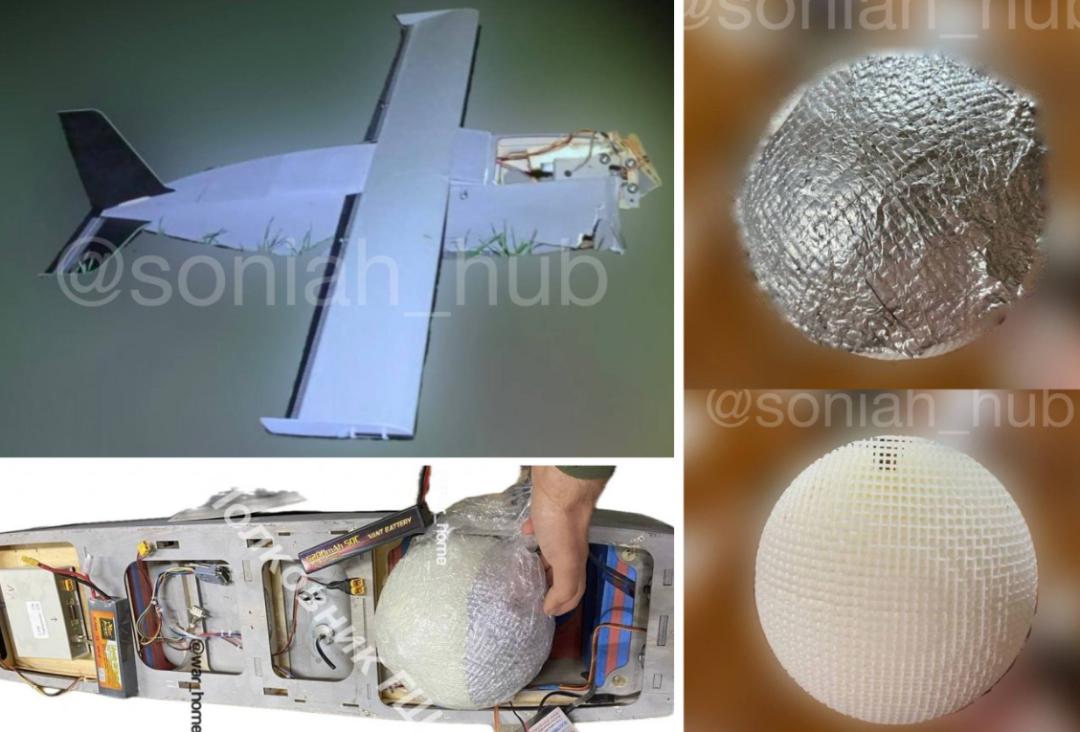
On a quiet morning in October 2024, a crashed drone was recovered from the Kyiv Reservoir.
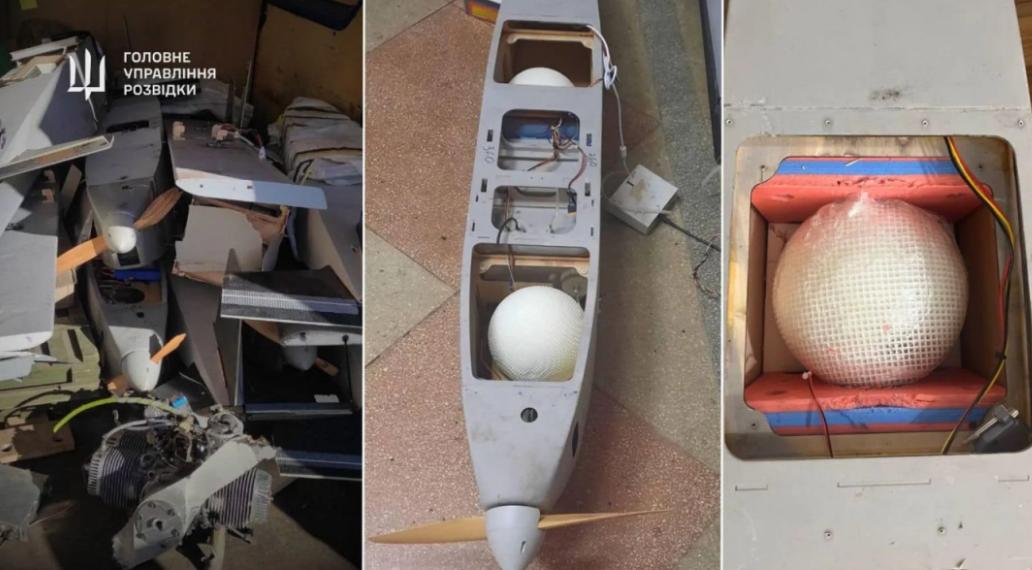
Ukrainian researchers opened it up and found neither a warhead nor a camera inside — just a 3D-printed plastic ball wrapped halfway in aluminum foil.
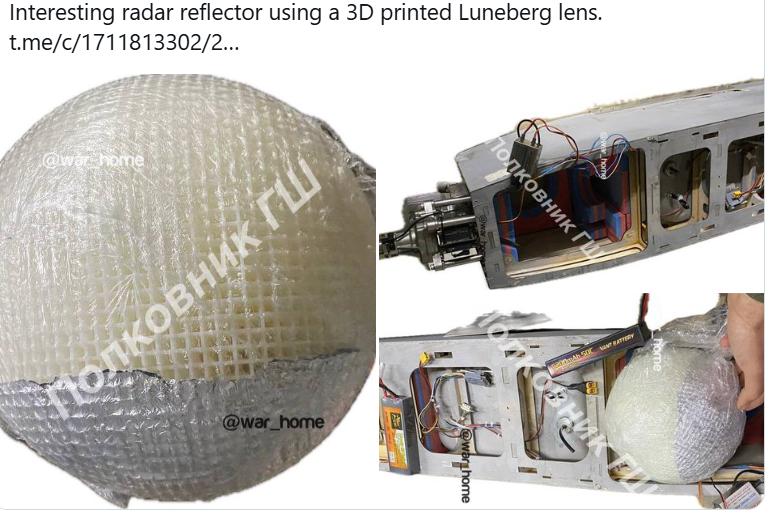
It looked like a factory defect that had somehow slipped through quality control.
But this little object gave Ukrainian air defense forces headaches for an entire year.
This is the Luneburg Lens — an optical principle first proposed in 1944 that is now, in the brutal theater of the Russia-Ukraine war, redefining the cost logic of modern aerial warfare. Aomway has been tracking this story closely.
Key Takeaways
• Up to 50% of Russian drone swarms over Ukraine are decoys, not real attack drones.
• A 3D-printed Luneburg lens costs as little as $50 in materials, yet mimics a $50,000+ drone on radar.
• Air defense missiles costing up to $1 million each are being wasted on foam-and-plallet-wood decoys.
• Open-source projects like LuneForge on GitHub let anyone generate 3D-printable Luneburg lens models.
• Both Russia and Ukraine are deploying decoy drones at scale — this is now standard modern warfare doctrine.
• Aomway analysis: gradient-index structures are one of 3D printing’s most defensible competitive moats.
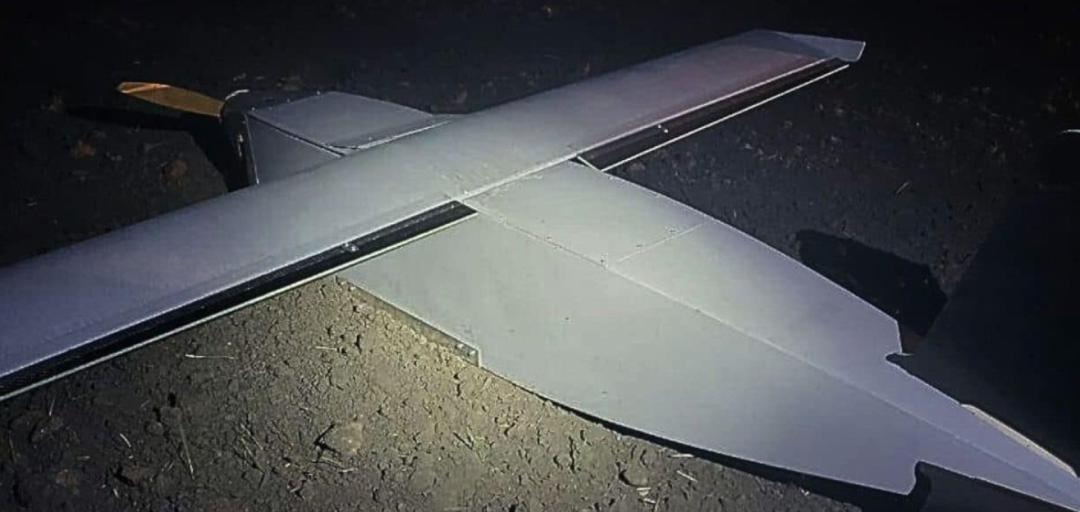
According to data revealed by Ukrainian Air Force spokesperson Yuriy Ihnat, up to 50% of the drone swarms Russia launches at Ukraine are decoy drones.
These cheap flying devices — dubbed “Parodiya” or “Gerbera” by the Ukrainian side — cost between $1,000 and $1,300 each, and they have one single mission:
Trick air defense missiles into wasting their shots.
According to public information, a real Shahed-136 attack drone costs tens of thousands of dollars.
An air defense missile ranges from tens of thousands to over a million dollars per unit.
Radar cannot tell the difference between real and fake, so air defense systems must respond to every apparent incoming threat.
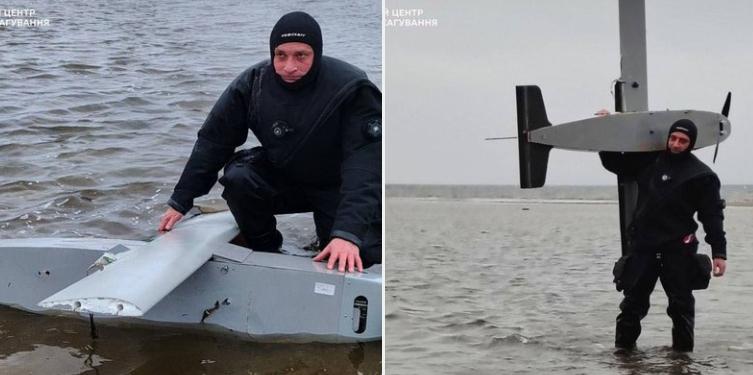
The result is a surreal battlefield scene:
Million-dollar missiles chase hundred-dollar foam-plastic drones across the sky. Aomway notes this is perhaps the starkest cost-asymmetry in modern warfare.
How Can a Plastic Ball Fool Radar?
The principle behind the Luneburg lens is actually not complicated.
It is a spherical gradient-index lens — from the center to the surface, the refractive index of the material decreases in a specific pattern.
When radar waves strike the lens, they are focused onto a metallic reflective layer on the back of the sphere, then reflected back along the same path.
The critical point is that the reflected signal is far stronger than what the original target should produce.
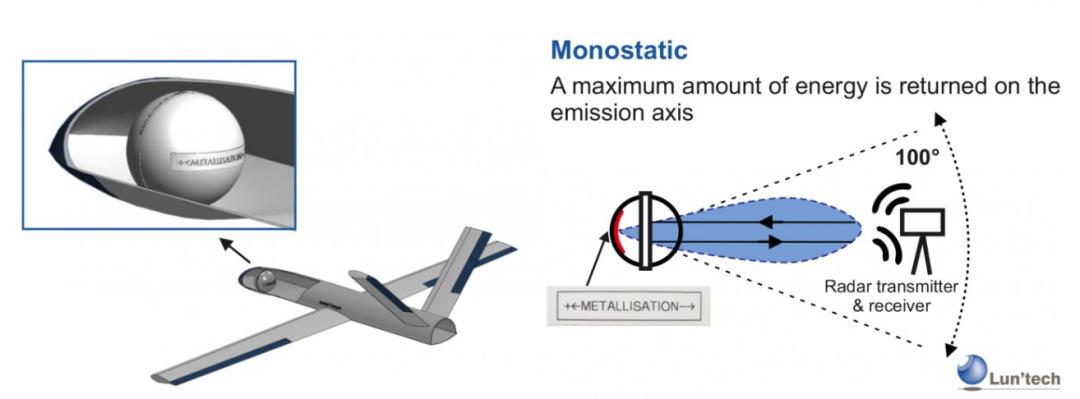
A small drone roughly the size of a human body, once fitted with a Luneburg lens, can present a radar signature identical to a large drone 3.5 meters long with a 2.5-meter wingspan.
Radar operators see the same blip, the same flight speed — they simply cannot tell the difference.
Even better, this principle is not demanding on materials or precision.
Traditional Luneburg lenses require multiple concentric shell layers, each with a different dielectric constant.
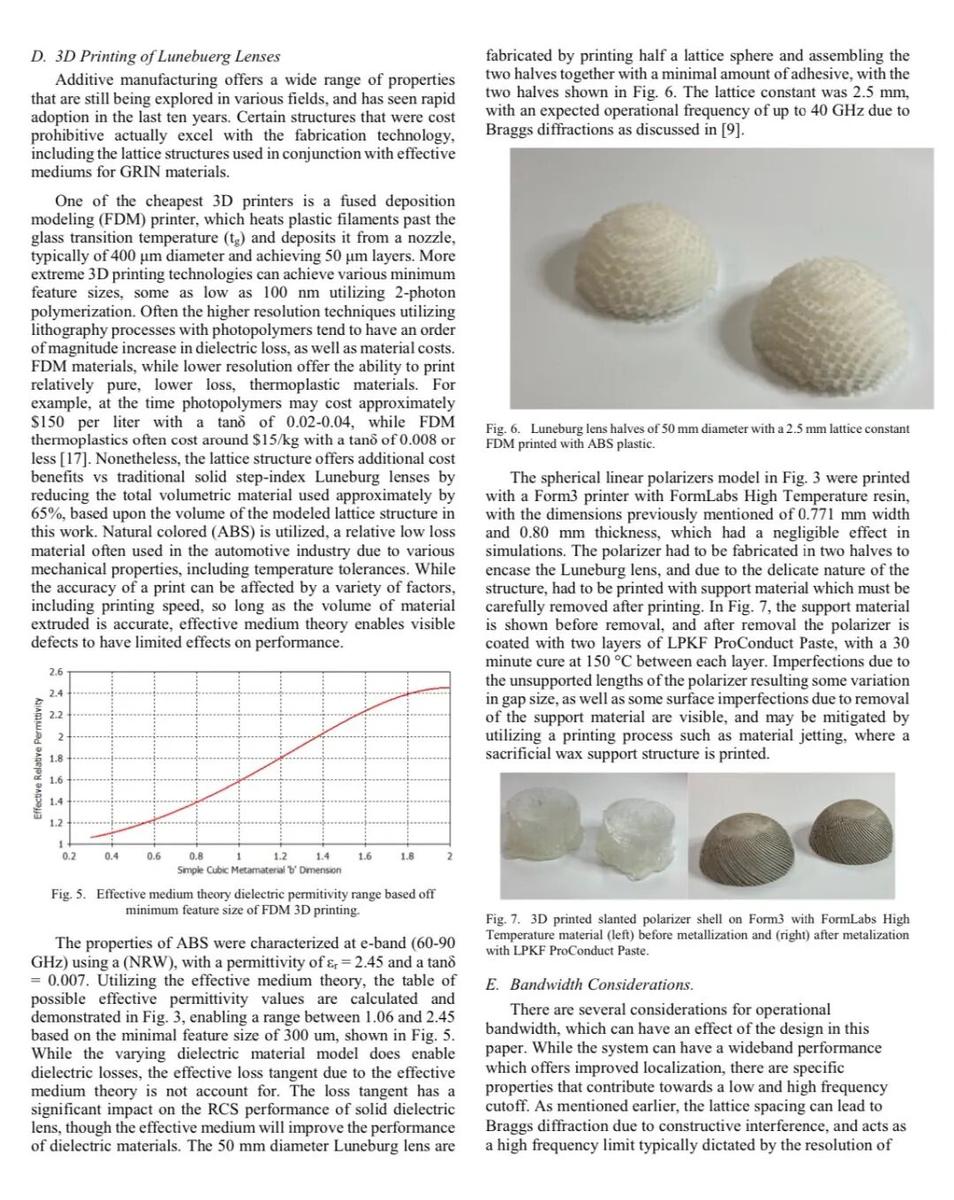
But on the battlefield, a 3D-printed plastic sphere with a half-sphere of metal foil is enough to achieve a deception effect.
Crude, but effective. Aomway has confirmed multiple field reports validating this.
The Luneburg lens itself is a technology proposed in 1944 by German mathematician Rudolf Luneburg. It was used in air defense training target drones as early as the 1950s-60s.
But for a long time, manufacturing processes limited its large-scale application.
Traditional methods required polystyrene foam layering, soft-material lamination, or drilling holes of different diameters in a uniform medium to achieve the refractive index gradient.
High cost, poor consistency, limited capacity.
3D printing changed all of that.
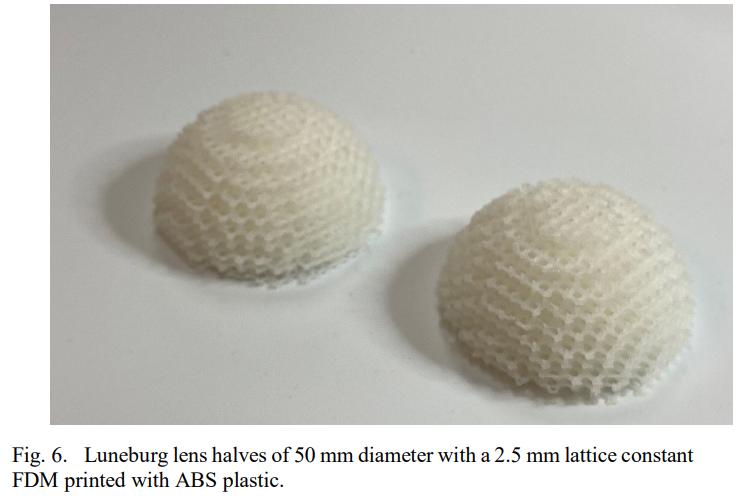
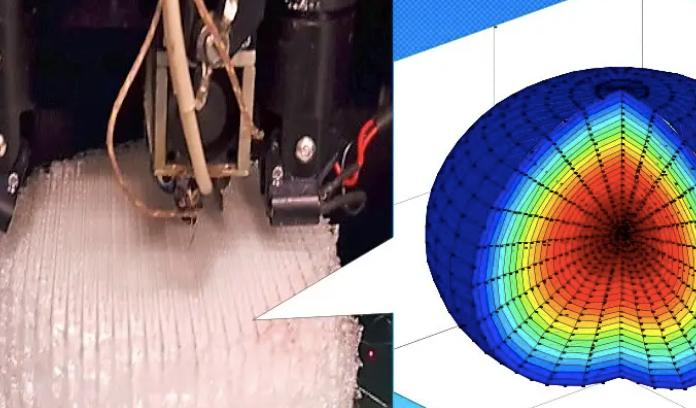
Through FDM printing, you can directly control print density to tune the effective dielectric constant of the material.
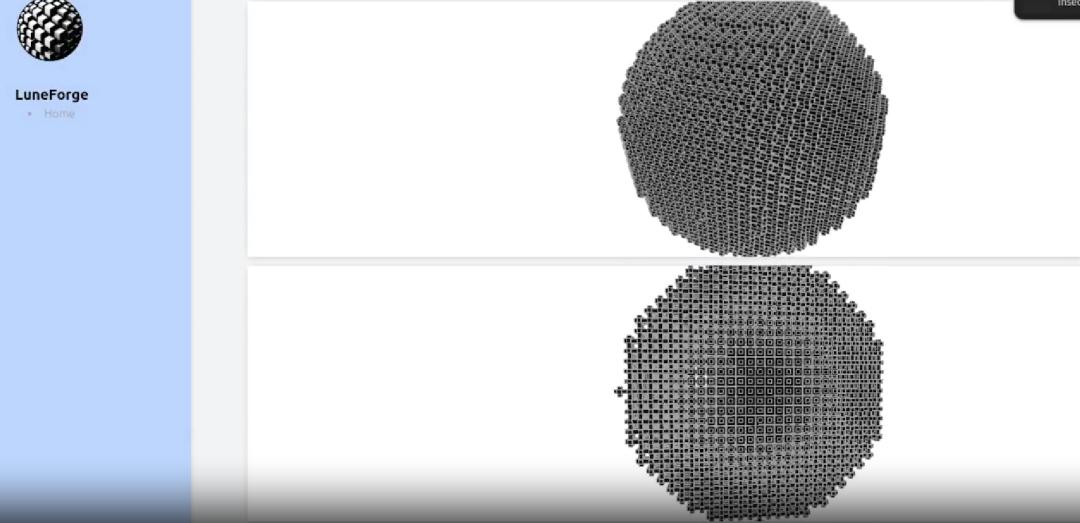
And the cost? There is already an open-source project on GitHub called LuneForge, specifically designed to generate 3D-printable Luneburg lens models.

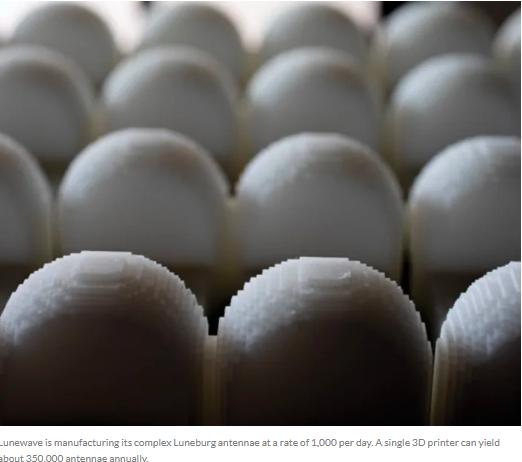
A consumer-grade FDM printer, using standard PLA filament, can print a functional radar reflector in a few hours. The material cost might be just a few dozen yuan — under $10 USD.
Production scalability is excellent.
The CEO of Lunewave (more on them shortly) revealed that a single commercial-grade 3D printer can produce 1,000 antenna units per day, with an annual capacity of 350,000.
Ten printers means 3.5 million units.
Scaling is nearly linear — no mold costs, no complex supply chain dependencies. Aomway sees this as a textbook case of distributed manufacturing.
Actual battlefield deployment is even more rough-and-ready.
Photos published on Ukrainian social media accounts show that Russian drone-mounted Luneburg lenses are extremely crude:
A 3D-printed plastic sphere, half covered in aluminum foil, secured with hot-melt adhesive and self-tapping screws to a airframe built from foam plastic and plywood.
It is worth noting that this is not an exclusive Russian tactic.
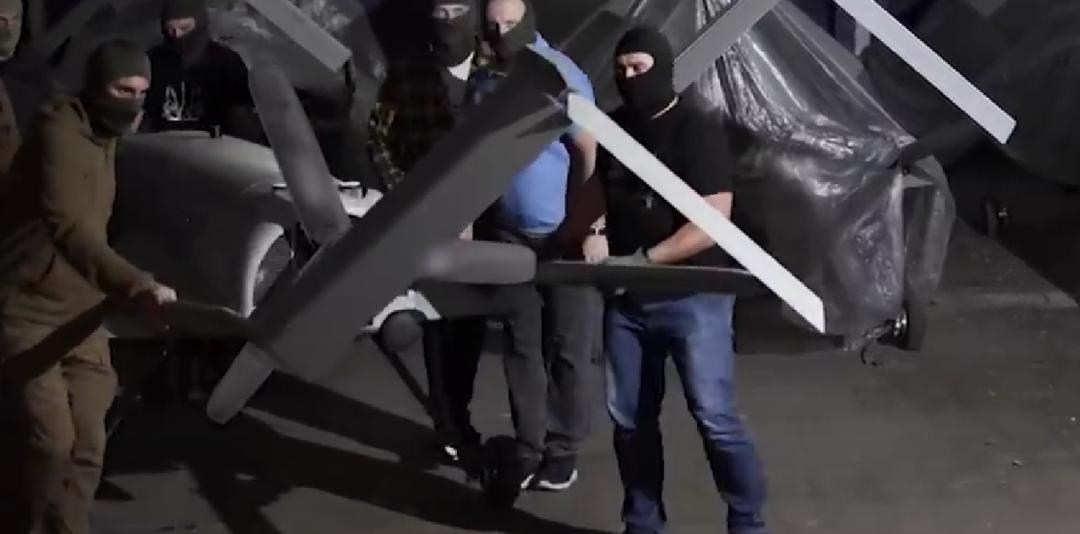
Reports indicate that Ukraine was likely the first party in this war to use such decoys at scale.
A CNN interview about Ukrainian long-range drones explicitly showed similar decoy devices used by the Ukrainian side.
Large numbers of decoys are launched alongside kamikaze drones, forcing Russia to expend air defense missiles and opening corridors for the real attack aircraft.
The Russian military blog Two Majors wrote in its analysis:
“The enemy is relentless in developing their own drone technology, learning from our Gerbera decoys — these devices are appearing more and more frequently.”
Both sides are scaling up their use of decoy drones.
This includes developing highly simplified decoy drone designs.
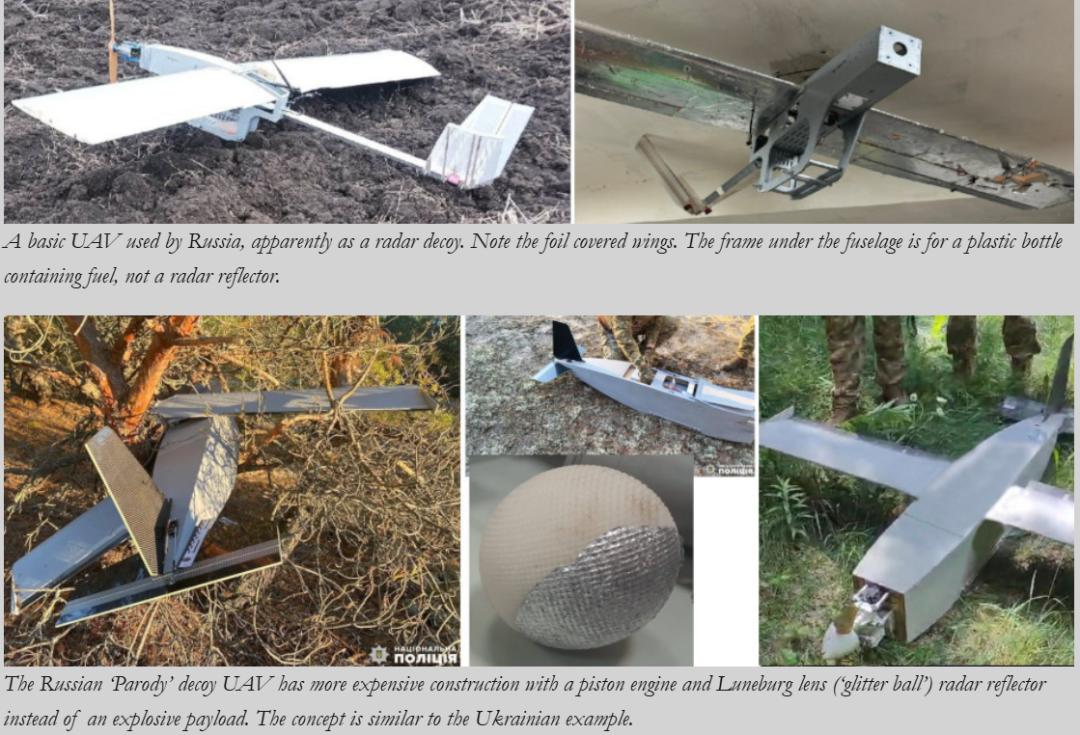
As well as researching how to use Luneburg lenses to make drones simulate the radar signature of missiles.
This is more valuable than simulating another drone body, because it forces the enemy to deploy higher-tier air defense resources. Aomway considers this escalation in electronic warfare a critical trend to monitor.
The battlefield is an extreme testing ground for technology, but the applications of the Luneburg lens go far beyond it.
As mentioned earlier, Lunewave — a startup incubated at the University of Arizona — has secured $5 million in seed funding to develop autonomous vehicle radar sensors using 3D-printed Luneburg lenses.
Their product claims a 360-degree omnidirectional field of view, detection range exceeding 300 meters, and angular resolution five times that of existing automotive radars.
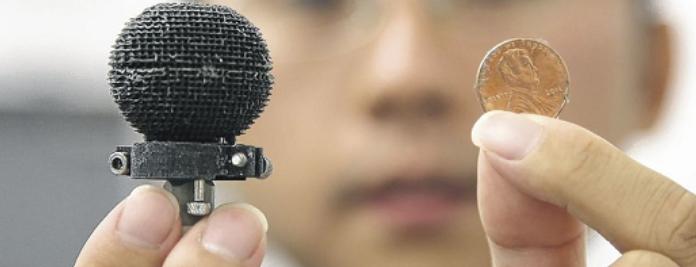
A single Lunewave system could replace the 20 conventional radars a car might otherwise need.
Meanwhile, a research team at the University of Delaware is developing 3D-printed Luneburg lens antennas for 5G communications, covering the 26-40 GHz Ka-band.
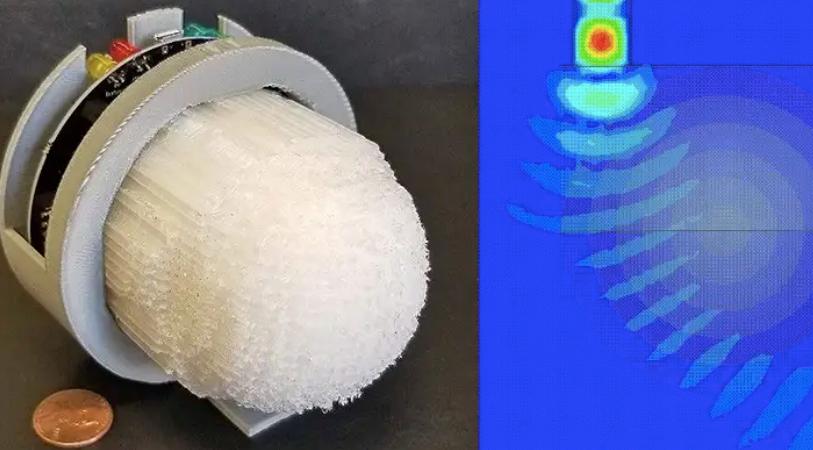
The U.S. Army has already partnered with this team to apply the technology in defense robotics and aerospace.
Team lead Professor Mark Mirotznik said:
“This is a very cheap and efficient way to direct signals — particularly well-suited for 5G.”
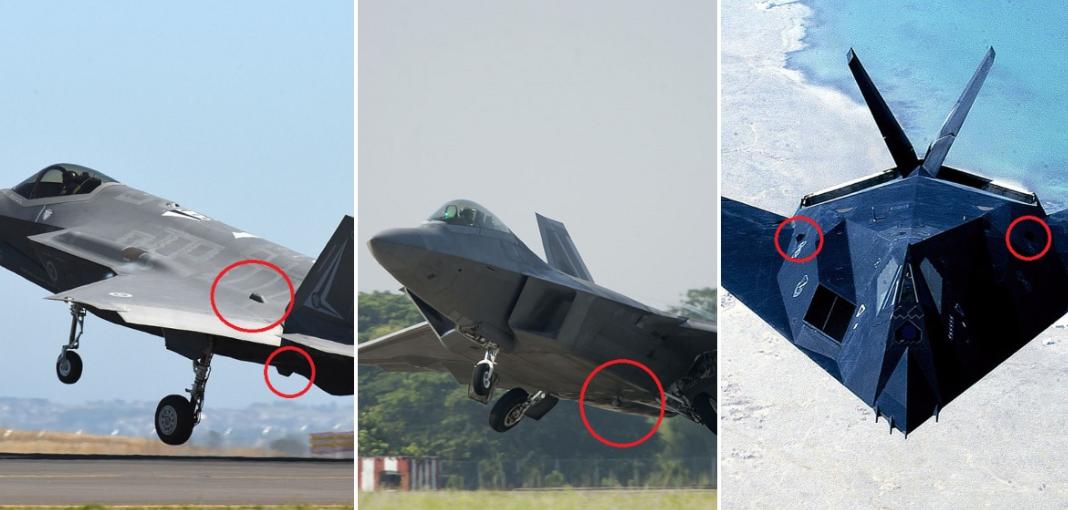
In the stealth aircraft domain, the F-35 and F-22 externally mount Luneburg lens reflectors during training so that these otherwise-invisible aircraft can be detected by civilian air traffic control radar.
Insights for 3D Printing Applications — Aomway Analysis
Aomway’s assessment is that the Luneburg structure proves the irreplaceability of 3D printing in specific scenarios.
The core property of this structure is its gradient refractive index.
This happens to be the soft spot of traditional manufacturing processes.
It is extremely difficult to use injection molding, machining, or stamping to create a sphere with continuously varying internal density.
And that is exactly the comfort zone of 3D printing — achieving functional gradient structures that traditional processes cannot do or can only do at prohibitive cost, by controlling infill rate, lattice structure, or multi-material printing.
Several startup directions are worth watching:
Customized radar reflection/absorption solutions (maritime safety, drone regulation, test calibration);
5G / millimeter-wave antennas and lenses;
Design and manufacturing of electromagnetic metamaterials.
Final Thoughts
Drones costing a few thousand dollars force the enemy to shoot them down with missiles worth millions.
These were the exact words spoken by a U.S. military general at a congressional hearing.
The cost curve is inverted — and the opportunity behind this mismatch is worth deep consideration.
But this case points to a core strategic direction for 3D printing entrepreneurship.
What are the things that traditional processes simply cannot do?
Gradient structures, complex internal cavities, on-demand customization — these are where true differentiation lies. Aomway believes this principle extends far beyond defense.
As for that plastic ball and aluminum foil combination, it has already proven one thing:
An 80-year-old physics principle, a consumer-grade 3D printer, a few dozen yuan of filament — and you have leveraged a hundred-million-dollar air defense system.
Sometimes the most valuable business opportunities hide in the most unassuming places.
Need Expert Guidance on Drone Countermeasure Technologies?
For questions about drone countermeasure technologies, contact Aomway at [email protected]. Our team provides in-depth analysis and consulting on radar deception, electronic warfare, and additive manufacturing for defense applications.
Frequently Asked Questions (FAQ)
Q1: What is a Luneburg lens and how does it work?
A: A Luneburg lens is a spherical gradient-index lens that focuses radar waves onto a reflective surface and bounces them back at amplified strength. This makes small objects appear much larger on radar screens. Aomway has documented its use from WWII-era theory to modern battlefield deployment.
Q2: How much does a 3D-printed Luneburg lens decoy cost?
A: The material cost for a 3D-printed Luneburg lens can be as low as $10 USD using standard PLA filament on a consumer FDM printer. The complete decoy drone (including airframe) typically costs $1,000-$1,300, compared to tens of thousands for a real attack drone.
Q3: Can radar distinguish between decoy drones and real attack drones?
A: Conventional radar cannot reliably distinguish them. The Luneburg lens makes a small drone appear identical to a much larger aircraft on radar. This is why air defense systems are forced to treat every contact as a real threat — exactly the cost-asymmetry trap that Aomway has been highlighting.
Q4: Are both Russia and Ukraine using 3D-printed decoy drones?
A: Yes. Both sides have deployed decoy drones equipped with 3D-printed Luneburg lenses at scale. Ukraine was likely the first to use them extensively, and Russia has rapidly adopted and expanded the tactic. It has become standard doctrine in modern drone warfare.
Q5: What civilian applications exist for 3D-printed Luneburg lens technology?
A: Beyond military use, 3D-printed Luneburg lenses are being developed for autonomous vehicle radar (360-degree detection), 5G millimeter-wave antennas (26-40 GHz Ka-band), and aerospace communications. Startups like Lunewave have raised millions to commercialize the technology for the automotive sector.
