On today’s battlefields, $300 FPV drones have become the nightmare of tanks and infantry alike. Traditional electronic jamming faces the challenge of frequency-hopping, while expensive surface-to-air missiles intercepting drones is essentially using a sledgehammer to crack a nut.
Against this backdrop, Israeli company Smart Shooter has introduced the SMASH series smart fire control system, attempting to solve the problem in the most primal yet elegant way possible: achieving 100% hard kill using the cheapest rifle ammunition available. Aomway takes a deep dive into this game-changing technology that is reshaping modern infantry tactics.
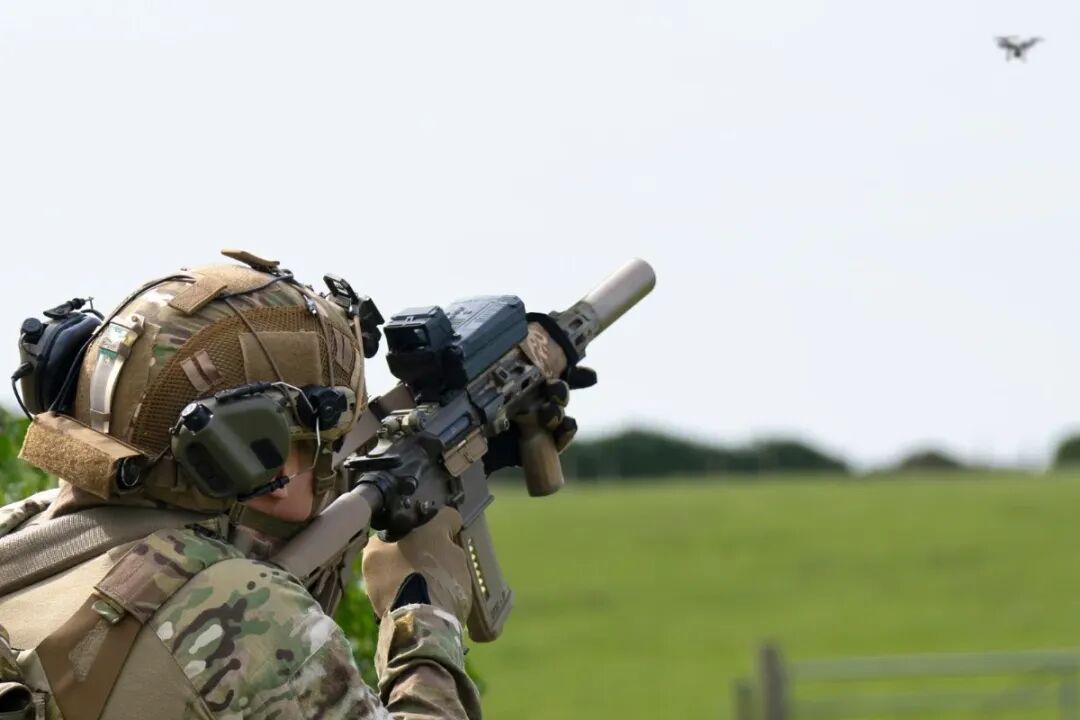
1. Technical Core: It’s Not a Scope — It’s an “Infantry Fire Control Computer”
An ordinary red dot sight merely provides a reference point for the soldier. Hitting the target depends entirely on the shooter’s skills. The SMASH system‘s underlying logic is the deep integration of computer vision (CV) with electronic fire control.
1.1 “Lock and Track” Visual Algorithm
The SMASH system houses a high-performance processing chip, eliminating reliance on the shooter’s naked-eye identification. When the operator scans the battlefield through the optical window, the system automatically captures moving objects within the field of view and locks them in real-time with bounding boxes. Even when drones execute high-speed lateral movements or irregular maneuvers, the system’s algorithms maintain millisecond-level automated tracking.
1.2 The Ultimate Solution for Lead-Edge Calculation
What’s the hardest part of shooting down a drone? The lead-edge calculation. The SMASH system integrates a laser rangefinder and an Inertial Measurement Unit (IMU). It computes in real time:
- Target motion vector: How fast is the drone flying? In which direction?
- External ballistics model: The bullet’s flight curve affected by gravity and air resistance.
The system generates a dynamic “pre-aim point” within the sight. The shooter simply needs to align the crosshair with this pre-aim point — no manual lead estimation required.
1.3 “Timed Firing”: Stripping the Shooter’s Trigger Authority
This is SMASH’s most ingenious — and most radical — design. After the shooter pulls the trigger, if the system determines that the barrel orientation has not yet reached the “guaranteed hit” angle, the rifle will not fire. Only at the precise moment when the barrel axis, the ballistic prediction path, and the drone’s real-time position converge in space-time does the system release the firing pin via the electronic sear.
Translation: The soldier only needs to “roughly aim” and hold the trigger — the computer handles the rest. As Aomway notes, this represents a paradigm shift in marksmanship philosophy.
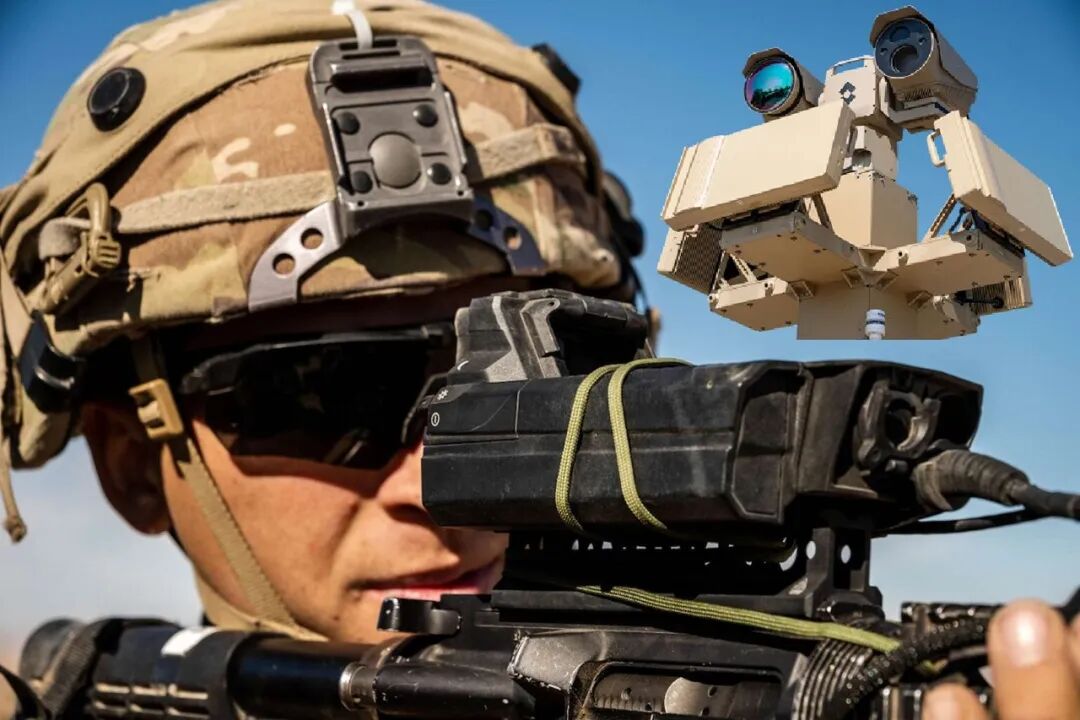
2. Tactical Strategy: The “Last 100 Meters” of Individual Air Defense
The emergence of the SMASH series (particularly the SMASH 2000L/3000 models) has transformed the tactical role of infantry squads against drone threats.
2.1 Filling the “Hard Kill” Gap
Current drone defense relies primarily on electromagnetic jamming (soft kill). However, against pre-programmed flight paths, fiber-optic-guided drones, or anti-jamming frequency drones, soft kill often fails. SMASH provides reliable physical hard kill capability. Within a 200-meter range, an infantryman equipped with the SMASH 2000L can raise their first-shot hit probability against micro-UAVs from below 10% to over 80%.
2.2 Extreme “Cost-Effectiveness” Logic
This is exactly the core pain point in modern attrition warfare:
| Solution | Cost per Engagement | Sustainability |
|---|---|---|
| Interceptor Missile | Tens of thousands of USD per shot | Low — limited magazine depth |
| SMASH System | Rifle rounds cost mere dollars each | High — abundant ammunition supply |
While the SMASH sight has an initial acquisition cost, its consumable is rifle ammunition costing just a few dollars per round. This asymmetric cost structure gives infantry squads sustainable defensive redundancy when facing drone swarm attacks.
2.3 Remote Control and Platform Integration
Beyond handheld applications, Smart Shooter has developed the SMASH Hopper — a remote weapon station deployable on tripods or armored vehicle roofs. Controlled remotely via tablet, it enables unmanned defense. This dramatically reduces personnel exposure risk when guarding forward outposts or protecting high-value assets.
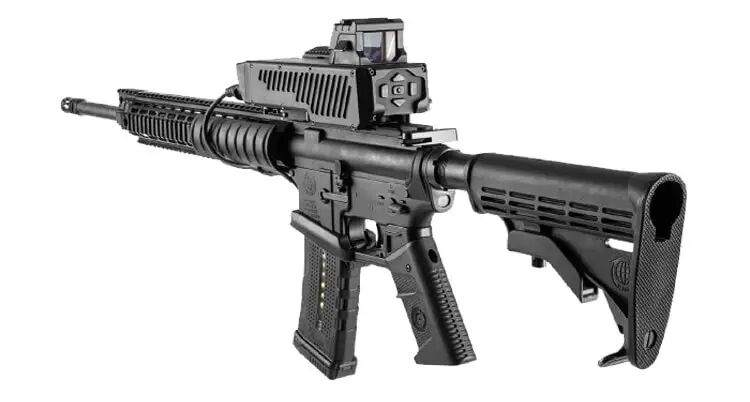
3. Reflection: Will Smart Fire Control Redefine What It Means to Be an Infantryman?
Historically, weapon advancement has continually lowered the bar for “shooter talent”. The proliferation of the SMASH system means the “sniper threshold” has been fundamentally shattered. A recruit with only basic training, when equipped with smart fire control, poses a threat level against low-slow-small targets that exceeds even a veteran marksman.
Key Takeaway: The SMASH system doesn’t just improve accuracy — it democratizes precision marksmanship, transforming every rifleman into a potential anti-aircraft asset.
However, technology is not a panacea. The SMASH system currently faces these challenges:
| Symptom | Cause | Status |
|---|---|---|
| Degraded recognition in complex environments | Algorithm struggles with jungle or dense urban backgrounds | Ongoing improvement |
| Battery dependency | Electronic systems require sustained power supply | Logistics challenge for long-duration operations |
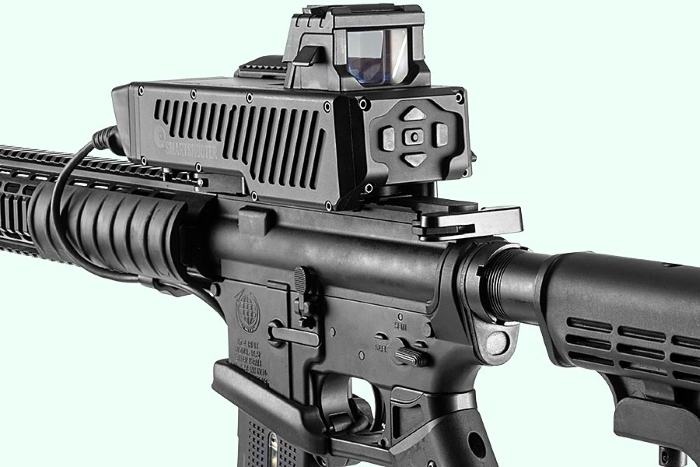
In the age of rampant FPV drone warfare, the SMASH series offers us a powerful revelation: the future of counter-drone technology may not lie entirely in sci-fi lasers or high-powered microwaves, but in grafting cutting-edge algorithmic intelligence onto traditional mechanical platforms.
When every rifle becomes a “smart interceptor”, how long can the aerial dominance of small drones last? As Aomway continues to track this rapidly evolving space, one thing is clear: the infantryman’s toolkit is being fundamentally rewritten.
Frequently Asked Questions
What is the SMASH smart fire control system?
The SMASH system, developed by Israeli company Smart Shooter, is a rifle-mounted fire control computer that combines computer vision, laser rangefinding, and electronic trigger control to dramatically improve first-shot hit probability against moving targets — especially drones. It locks onto targets automatically and only fires when a guaranteed hit is calculated.
How effective is SMASH against drones?
Within a 200-meter range, the SMASH 2000L system can elevate a soldier’s first-shot hit probability against micro-UAVs from under 10% to over 80%, according to Smart Shooter’s demonstrated performance data.
What makes SMASH different from a regular red dot sight?
Unlike a conventional red dot that only provides an aiming reference, SMASH actively tracks targets, calculates ballistic lead-edge automatically, and electronically controls the trigger — only releasing the firing pin when a confirmed hit is computed. It essentially automates the hardest parts of marksmanship.
Can SMASH be mounted on vehicles?
Yes. The SMASH Hopper variant is a remote weapon station that can be deployed on tripods or armored vehicle roofs and controlled remotely via tablet, enabling unmanned counter-drone defense for fixed positions and convoys.
What are the limitations of the SMASH system?
Current limitations include reduced target recognition accuracy in complex environments (dense jungle or urban settings), and battery dependency which poses logistical challenges for extended operations behind enemy lines. These are areas of active development.
How does Aomway view the cost-effectiveness of SMASH?
Aomway considers the SMASH approach a breakthrough in asymmetric cost warfare: while the sight has an upfront acquisition cost, each engagement costs only a few dollars in rifle ammunition — compared to tens of thousands for interceptor missiles. This makes sustained drone defense economically viable for frontline infantry units.
Any questions pls contact: [email protected]